Homemade fajita seasoning takes five minutes, uses spices you probably own, and replaces a packet that is mostly salt and filler.
This blend is measured to match one 1.27 ounce packet, so you can swap it into any recipe that calls for one. It also comes with the answers to the questions people actually ask: how much to use, whether it works in a marinade, and what to do about salt.
Why This Works
- It matches the packet. One batch makes about 3 tablespoons, the same as a standard packet. No math when a recipe says “1 packet.”
- You control the salt. Packets often list salt first. In this blend it’s one small, adjustable ingredient.
- No filler. Check the back of your packet. Most list cornstarch, and many add sugar and anti-caking agents. Spices don’t need any of that to work.
- Smoked paprika does the heavy lifting. It gives you the grilled, smoky flavor you’d normally get from a hot grill.
The Ingredients, and What Each One Does
Chili powder is the base. It’s a blend itself, usually ground chilies plus cumin, garlic, and oregano, so it gives you body and mild heat.
Smoked paprika brings the char flavor. Regular paprika works if that’s what you have, but you’ll lose the smoke.
Cumin adds the earthy, warm note that makes it taste like fajitas and not just chili powder.
Garlic powder and onion powder cover the savory backbone. Use powder, not granulated, because it blends evenly and doesn’t clump.
Oregano adds a little herbal edge. Mexican oregano is great if you have it.
Black pepper and cayenne bring the heat. Skip the cayenne for a mild blend, or double it if you like a kick.
Kosher salt goes in last, and it’s the one you adjust. I use 1 teaspoon per batch. If you’re cutting sodium, use 1/2 teaspoon and salt the food directly.
How to Make It
Measure and mix
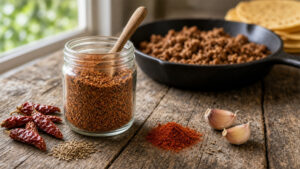
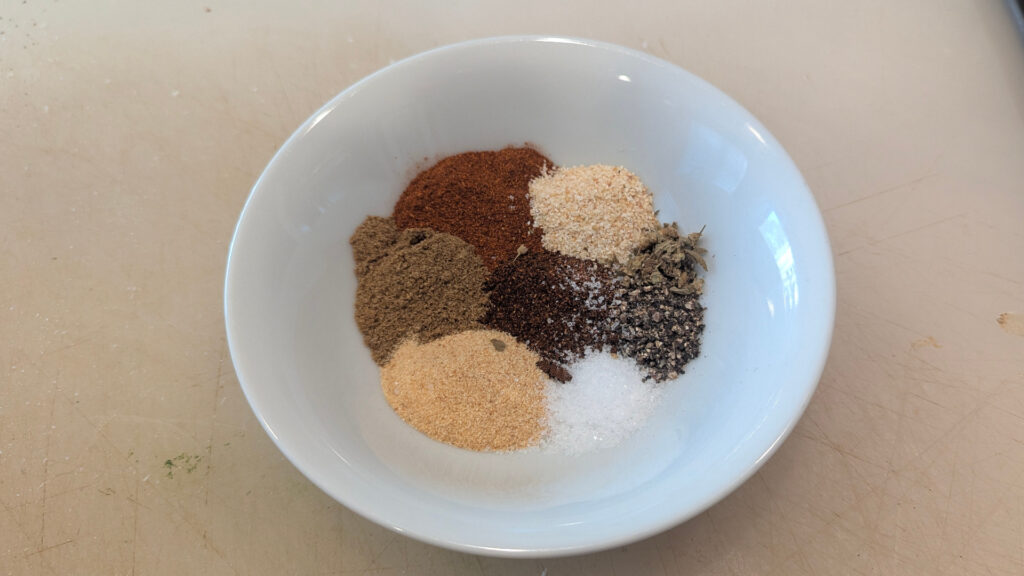
Add everything to a small bowl or jar. Stir with a fork, or put the lid on and shake for 10 seconds. You want an even, deep brick-red color with no streaks of paprika or pale pockets of salt.
Store it
Keep it in an airtight jar away from the stove. It stays good for about three to six months. Spices don’t spoil, but they fade.
A Word on Salt and Starch
Store-bought packets are built to be foolproof, which means they’re built to be salty. The salt is a big part of the flavor, and it’s also why a packet can turn a pot of broth and cheese into a salt bomb.
Here’s how to handle it at home:
- Keep salt in the blend modest. At 1 teaspoon per batch, the blend seasons food without taking over.
- Salt the dish, not the jar. When you’re dry-seasoning meat, add 1/2 teaspoon kosher salt per pound on top of the blend. When the recipe already has salty ingredients, like broth, cheese, soy sauce, or Worcestershire, skip the extra salt and taste at the end.
The starch is the other thing packets have that this blend doesn’t. Most packets include cornstarch, which thickens the little sauce you make when you add water, as the packet directions tell you to. On a grill or in a hot, dry skillet, starch does nothing. In a jar, it can clump when the air gets humid.
If you want that saucy coating on your skillet fajitas, add the starch when you cook, not in the jar. Stir 1 teaspoon cornstarch into 1/4 cup cold water, pour it in after the meat and veggies are cooked, and simmer for one minute. Done. For the mac and cheese or any pasta dish, skip it. The pasta starch handles thickening.
How Much Seasoning Should You Use?
This is the most common question, and the answer is not “just a teaspoon.” One packet seasons about 1 1/2 pounds of meat plus a pepper and onion mix. Use this as your guide:
| What you’re seasoning | Amount of blend |
|---|---|
| Chicken or steak | 1 tablespoon per pound |
| Sliced peppers and onions (2 peppers, 1 onion) | 1 tablespoon |
| Shrimp | 2 teaspoons per pound |
| One-pan pasta or rice dish (like a 6-serving skillet) | The whole batch, split between the meat and veggies |
Can You Use It as a Marinade?
Yes. The dry blend works great in a marinade, and a marinade is the better choice for lean cuts like chicken breast and for tougher steaks like skirt or flank.
For 1 pound of meat, whisk together:
- 1 tablespoon fajita seasoning
- 2 tablespoons oil
- 2 tablespoons lime juice
- 1 tablespoon Worcestershire (optional, and skip the extra salt if you use it)
Timing matters because of the lime. Chicken needs 30 minutes to 4 hours. Steak can go 2 to 8 hours. Past that, the acid starts to break down the surface and the meat turns mushy instead of tender.
How to Season Steak Fajitas
Skirt steak and flank steak are the best cuts here. Both take a hot, fast sear well.
- Pat the steak dry. A wet surface steams instead of sears.
- Rub 1 tablespoon of the blend per pound into both sides, plus 1/2 teaspoon kosher salt per pound.
- Let it sit 30 to 45 minutes at room temperature.
- Sear in a screaming-hot cast iron skillet for 3 to 4 minutes per side, until the outside is deeply browned and the center reads 130 to 135°F for medium-rare.
- Rest it for 5 minutes, then slice against the grain into thin strips.
On Worcestershire and horseradish: You’re not off track. Worcestershire in the marinade is a smart move because it adds savory depth. Horseradish works best as a creamy sauce on the side: stir 1 tablespoon of prepared horseradish into 1/2 cup sour cream with a squeeze of lime. It leans steakhouse more than Tex-Mex, but it tastes great with a good skirt steak.
Tools I Used for This Recipe
- Small glass spice jar with airtight lid keeps the blend fresh and lets you shake it to mix.
- 12-inch cast iron skillet gives you the surface area and heat to char fajita meat and peppers instead of steaming them.
- Instant-read thermometer is how you hit 165°F on chicken and 130°F on steak without guessing.
- Measuring spoons matter more than you’d think here, since the blend is designed to match a packet.
Tips and Variations
- Make a big batch. Triple the recipe and keep it in a jar. One tablespoon per pound is easy to remember.
- Want more browning? Add 1/2 teaspoon brown sugar per batch. Packets often have sugar for this reason.
- Want a lime kick at the end? Finish with a squeeze of fresh lime, or a small sprinkle of Tajín over the finished dish.
- Going mild for kids? Skip the cayenne and cut the chili powder to 2 teaspoons.
What to Serve With Fajitas
Warm flour tortillas, sliced avocado, and a simple pico de gallo. A squeeze of lime over everything at the end wakes the whole plate up. For something heavier, black beans and rice.
CHECK OUT THESE 16 DIY SEASONING MIXES!
Frequently Asked Questions
How much homemade fajita seasoning equals one packet?
One batch of this recipe, about 3 tablespoons, equals one standard 1.27 ounce packet.
Can I use homemade fajita seasoning in a marinade?
Yes. Whisk 1 tablespoon per pound of meat with oil and lime juice. Marinate chicken for up to 4 hours and steak for up to 8.
How much fajita seasoning do I use per pound of chicken or steak?
About 1 tablespoon per pound, plus 1/2 teaspoon kosher salt if you’re dry-seasoning.
Why does store-bought fajita seasoning taste so salty?
Salt is often the first ingredient, and the packet is meant to flavor a lot of food at once. Making your own lets you set the salt level and adjust it to the dish.
Does fajita seasoning need cornstarch?
No. Packets add it to thicken the sauce when you stir in water. If you want that effect, add 1 teaspoon cornstarch mixed with cold water when you cook, not in the jar.
How long does homemade fajita seasoning last?
Three to six months in an airtight jar kept away from heat and light.
DIY fajita seasoning
Method
- Add the chili powder, smoked paprika, cumin, garlic powder, onion powder, oregano, black pepper, cayenne, and salt to a small bowl or jar.
- Stir with a fork or shake with the lid on for 10 seconds, until the blend is an even, deep brick red with no pale streaks.
- Use 1 tablespoon per pound of meat and 1 tablespoon for peppers and onions, or use the whole batch in place of one packet.
- If you aren’t going to use it immediately, store in an airtight jar away from heat for up to 6 months.
Notes
Marinade chicken up to 4 hours, steak up to 8 hours.
For a saucy coating, stir 1 teaspoon cornstarch into 1/4 cup cold water and simmer for 1 minute after cooking.
Optional: add 1/2 teaspoon brown sugar for deeper browning.