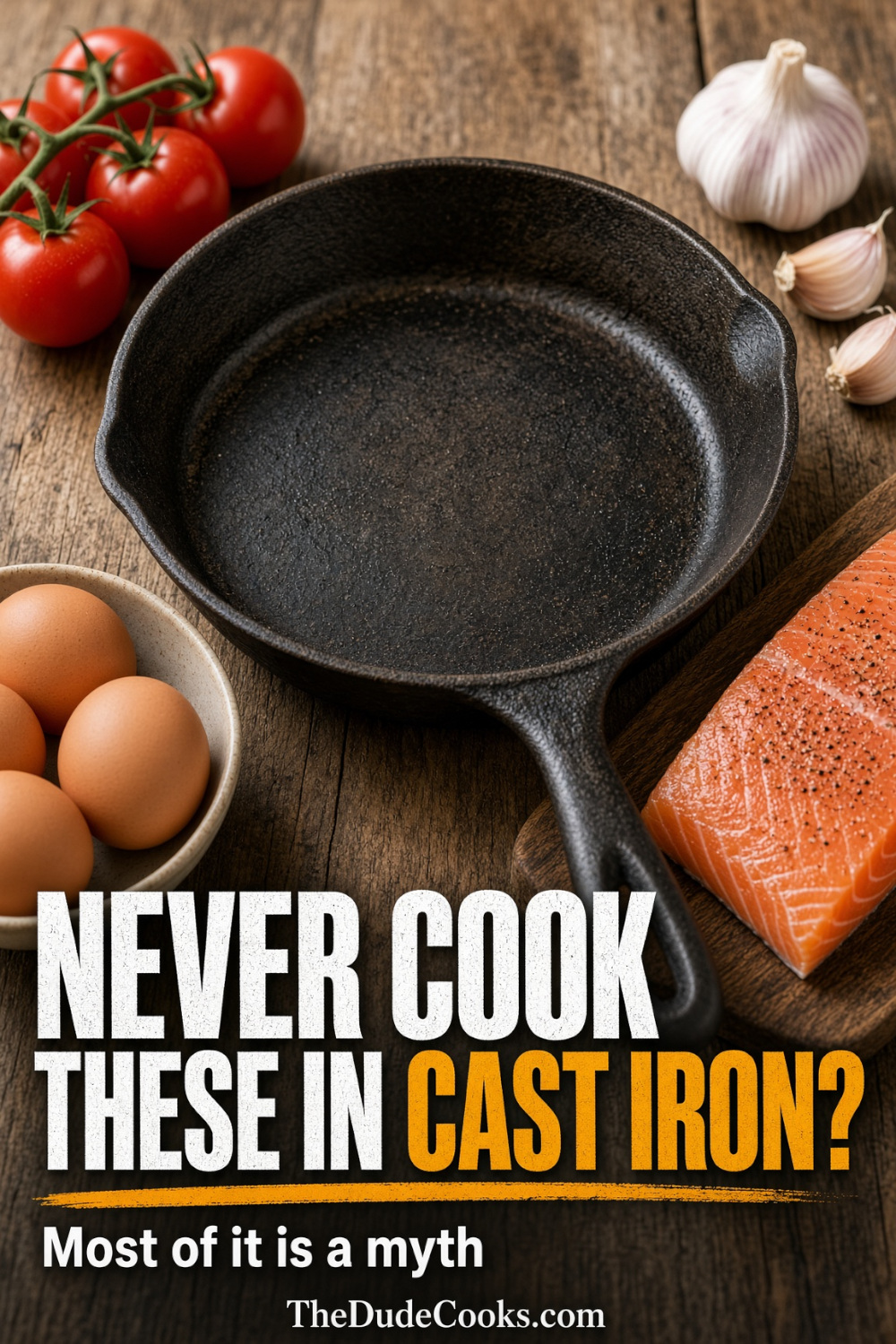
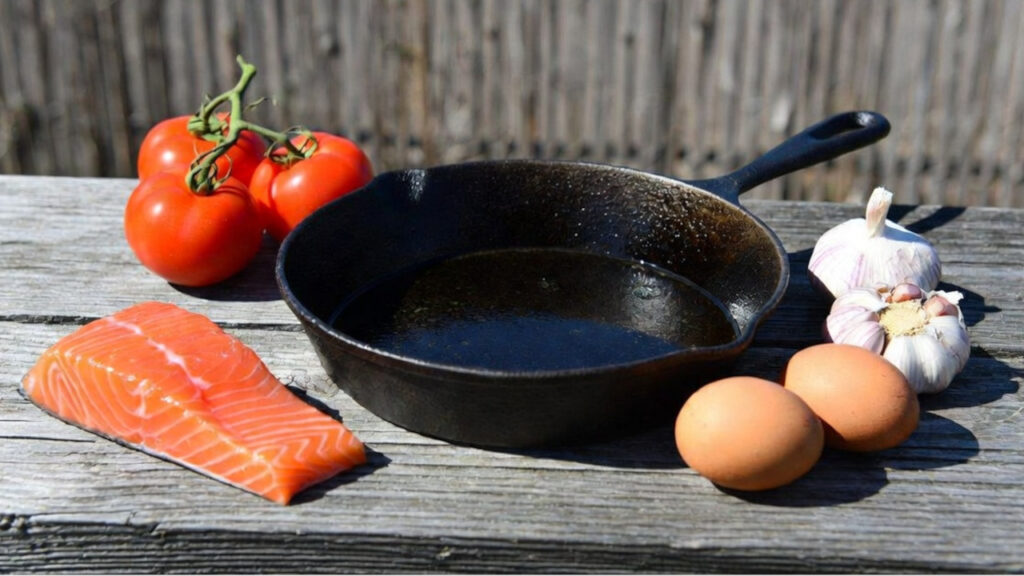
The list of foods you should never cook in cast iron gets repeated everywhere, and most of it is only half true. Tomatoes, fish, eggs, garlic. Somebody says no to all of them. A lot of these lists just copy each other.
I’ve cooked in cast iron for decades, and the real rules are simpler than the lists make them sound. A couple of the warnings are right. Most of the rest come down to heat, time, and how well your pan is seasoned. Here’s the usual “never” list, one food at a time, with what’s true and what’s a myth.
What Cast Iron Really Doesn’t Like
A seasoned pan has a layer of oil baked onto the metal until it turns hard and slick. Almost every warning on the “never” list comes back to three things. Acid can wear that layer down over time. Sticky food can make you scrape it off. And strong flavors can hang around in the pan. Keep those three in mind and the rest of the list makes more sense.
Salmon: Mostly a Myth
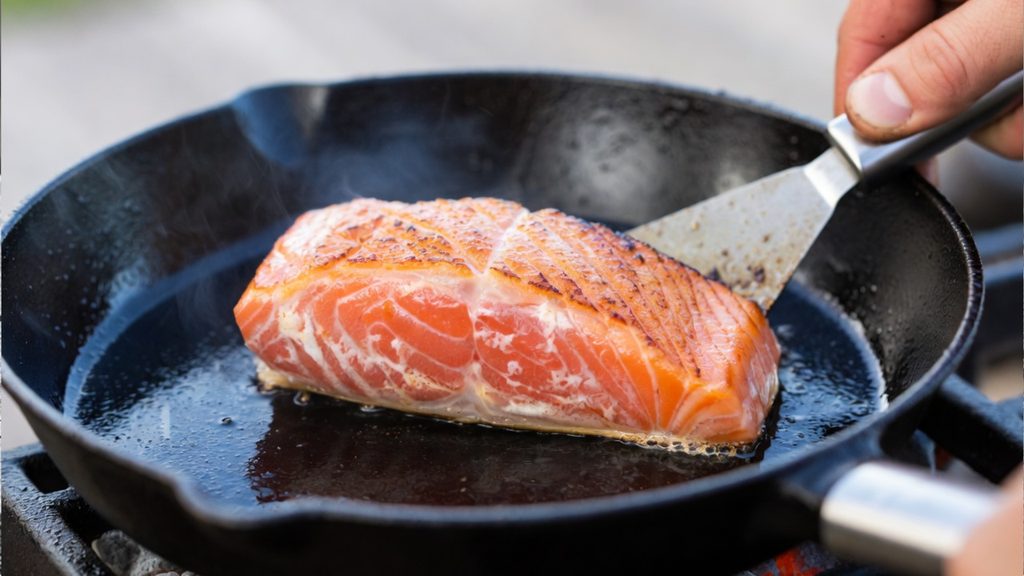
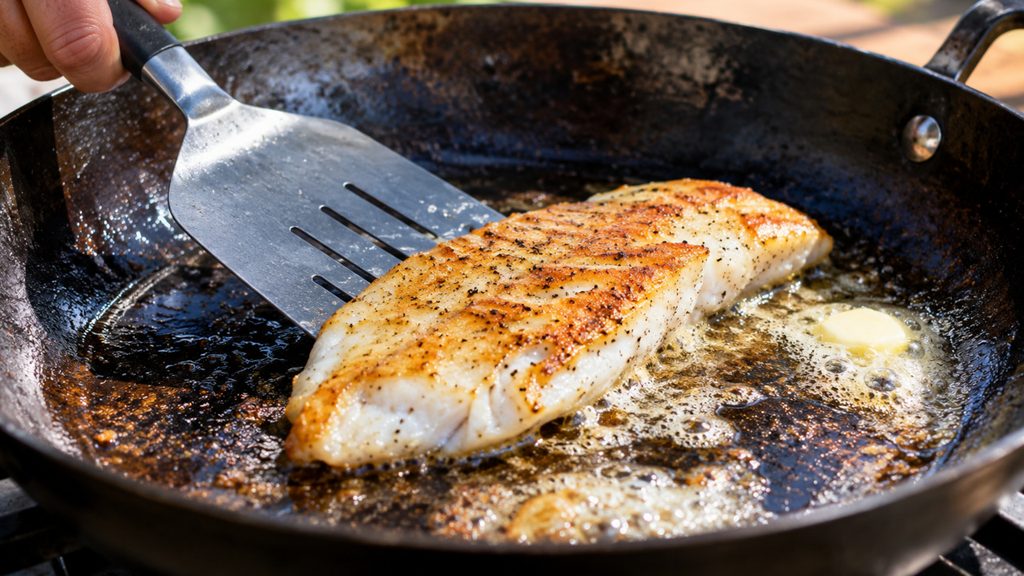
The warning says delicate fish sticks to cast iron. Salmon isn’t delicate fish. It’s a firm, fatty fillet, and cast iron is great at it. The pan stays hot when cold fish hits it, and that heat is what gives you crispy skin.
Sticking comes from technique, not the pan. Pat the fillet dry. Heat the pan before the oil goes in. Cook it skin side down and leave it alone. The skin helps keep the fish from sticking, and the fillet lets go on its own when it’s ready to flip. If you have to pull on it, give it another minute. It’s the same hot-pan rule behind a steakhouse sear in cast iron.
One fair catch: fish smell can stay in the pan. I’ll cover the fix below. Starting with frozen fillets? My guide to cooking frozen fish fillets shows how to do it without drying them out.
Tomato Sauce and Wine: It Depends on Time
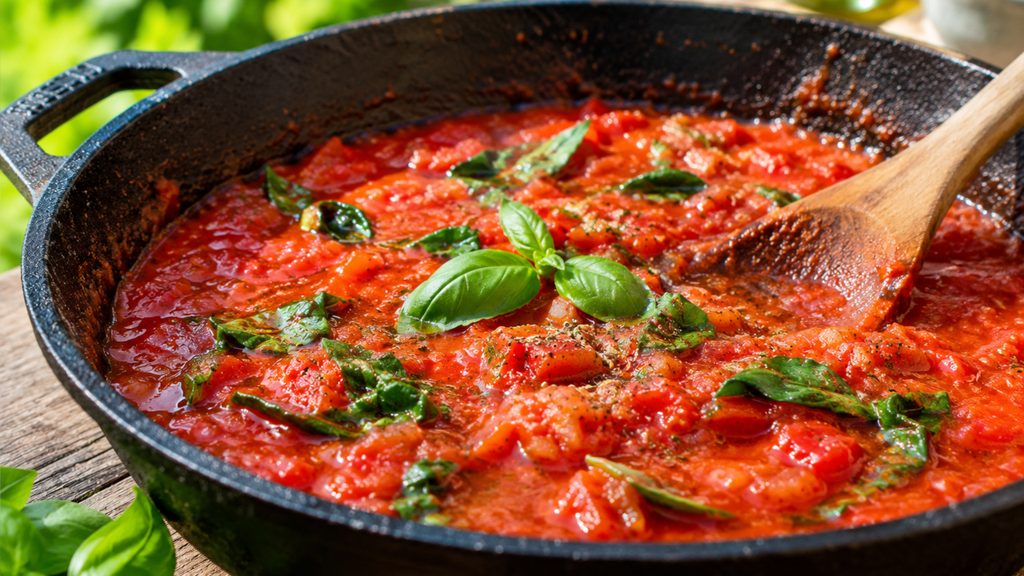
This one has the most truth in it, but “never” is too strong. America’s Test Kitchen simmered tomato sauce in seasoned and unseasoned cast iron, and its tasters didn’t notice a metallic taste until the sauce had cooked about 30 minutes. So a quick pan sauce, a skillet dinner, or a short simmer in a well-seasoned pan is fine.
A pot of sauce that bubbles for hours is different. Acid wears at the seasoning, and the sauce can pick up an iron taste. For long cooks, use a stainless or enameled pot. My slow-simmered Bolognese is the kind of sauce that belongs in a regular pot.
Two habits help. Don’t store leftover sauce in the skillet. And a splash of wine to deglaze the pan is fine, since it’s only in there for a minute or two.
Eggs and Omelets: Fine With Fat and Heat
Eggs stick to a dry, cold, or poorly seasoned pan. That’s true of every pan. A well-seasoned skillet, a good preheat, and a little butter or oil will give you eggs that slide right out. Cast iron isn’t truly nonstick, and nobody should pretend it is. It gets slick with use and with fat. I’d take a little butter over a coated pan any day, and I explain why I avoid nonstick in a separate post.
Garlic, Peppers, and Strong Flavors: Real, but Fixable
Garlic, hot peppers, and strong cheeses can leave their flavor behind. That part is real, and it’s easy to fix. If you’re about to cook something mild, like pancakes, heat the empty skillet in a 400°F oven for 10 minutes. Cook’s Illustrated says 15 minutes over medium heat on the stove also works, but it prefers the oven because your kitchen won’t smell. I cook garlic in cast iron whenever a recipe calls for it.
Desserts: Where the Warning Is Right
Here the warning is fair. Cast iron picks up the flavor of what you cook in it. If your skillet mostly sees onions, garlic, and fish, a brownie or pie can pick up an odd taste. Some bakers keep a separate skillet just for sweets. If you only own one, scrub it well, run it through the oven trick above, and bake something that can handle a little savory edge, like cornbread.
Soap and Soaking: Not the Same Thing
Not a food, but this rule shows up on the same lists. Lodge, one of the biggest makers of cast iron, says a small amount of mild soap is fine on a seasoned pan. The old no-soap rule came from the days of lye-based soaps. What hurts your pan is soaking it. Standing water leads to rust. Wash it, dry it right away, and rub on a thin coat of oil. My post on how to clean cast iron walks through it.
Where I Skip Cast Iron: Thin, Delicate Fish
This is where the warning has a point. Thin fillets like sole and flounder fall apart easily, and cast iron’s rougher surface leaves them very little room for error. For those, I’d use carbon steel and skip nonstick.
Carbon steel is lighter and smoother than cast iron, and you season it the same way. Once it has a few good cooks built up, thin fish slides right out. The pan I’d point you to is the de Buyer Mineral B PRO carbon steel omelette pan (Amazon link). Use the same rules as salmon: dry fish, hot pan, a thin layer of fat, and a wide fish spatula. A light dusting of flour helps very thin fillets hold together.
The Bottom Line
Two warnings hold up. Don’t simmer acidic foods for hours in cast iron, and don’t bake sweets in a pan that tastes like last night’s garlic. For thin fish, a carbon steel pan is easier. Everything else on the list comes down to a hot pan, dry food, a little fat, and patience. A well-seasoned skillet can handle a lot more than the “never” lists give it credit for.
Cast Iron Questions
Can you cook salmon in cast iron?
Yes. Heat the pan, pat the fish dry, cook it skin side down, and don’t move it until it releases on its own.
Can you cook tomato sauce in cast iron?
Yes, for short cooks in a well-seasoned pan, under about 30 minutes. Use a stainless or enameled pot for long simmers.
Can you use soap on cast iron?
Yes. A small amount of mild soap is fine. Don’t soak the pan, and dry it right away.
How do I get the smell out of cast iron?
Heat the empty pan in a 400°F oven for 10 minutes. That’s usually enough to clear garlic, fish, or pepper smells before you cook something mild.
What should you never cook in cast iron?
Very little is truly off limits. The real cautions are long acidic simmers and baking sweets in a pan that carries strong savory flavors.
What’s the one thing someone told you never to cook in cast iron? Tell me in the comments, and I’ll tell you if I’ve cooked it anyway.