
You’re elbow-deep in a casserole recipe. The onions are sautéed, the chicken is cubed, everything’s ready to go. Then you see it: “1 can cream of mushroom soup.” The can you swore was in the pantry. The can that is definitely, absolutely not in the pantry.
You’ve got three options. Drive to the store in your flour-dusted shirt. Abandon dinner and order pizza. Or make your own cream soup in about 10 minutes with stuff you already have.
This guide covers everything you need to know about ditching canned cream soups for good. I’ll explain why you might want to skip them permanently, break down the simple formula that makes all cream soups work, and give you a master recipe that becomes cream of chicken, mushroom, celery, or whatever you need. Plus storage tips, dietary modifications, and a shelf-stable dry mix for the preppers and campers out there.
By the end, you’ll never panic about a missing can of cream soup again.
Why I Don’t Use Canned Cream Soups
Let me be clear upfront: I’m not here to shame anyone who uses canned soup. It has its place. But once I started looking at what’s actually in those cans, and what the cans themselves are made of, I decided I’d rather spend 10 minutes making my own.
The Ingredient List Problem
Have you ever actually read the label on a can of Campbell’s Cream of Chicken Soup? Here’s what you’ll find: water, chicken stock, modified food starch, wheat flour, contains less than 2% of cream, salt, chicken fat, soy protein concentrate, monosodium glutamate, yeast extract, flavoring, soy protein isolate, sodium phosphate, beta carotene for color.
That’s about 15 ingredients for something that should be butter, flour, broth, and milk. The modified food starch is a processed thickener. The soy protein concentrate and isolate are cheap fillers. The MSG and yeast extract are flavor enhancers because the actual chicken flavor isn’t strong enough on its own. “Flavoring” tells you nothing about what it actually is.
If you’re fine with all that, no judgment. But if you’d rather know exactly what’s going into your food, keep reading.
The Sodium Situation
A single 10.5-ounce can of condensed cream of chicken soup contains around 2,175 milligrams of sodium. That’s about 95% of the recommended daily intake for most adults. In one can. Before you add any other ingredients to your casserole.
The “reduced sodium” versions still clock in at 700-900mg per can. And let’s be honest, most recipes that call for cream soup aren’t exactly low-sodium to begin with. Add salted butter, seasoned chicken, maybe some cheese, and you’re way over the line before you sit down to eat.
When you make your own, you control the salt. Use low-sodium broth, skip the added salt entirely, and season at the end to taste. Your homemade version will have roughly 750mg of sodium, and you can easily cut that in half.
The Can Liner Question
Here’s something most people don’t think about: that metal can isn’t actually touching your soup. Every food can has a thin plastic liner inside to prevent the metal from corroding and reacting with the food. For decades, that liner was made with BPA (bisphenol A), a chemical linked to hormone disruption, reproductive issues, and increased risk of certain cancers.
After public pressure, most manufacturers switched away from BPA. According to the Can Manufacturers Institute, about 95 percent of food cans are now made without BPA-based linings. Problem solved, right?
Not quite. The new linings are made from acrylic, polyester, non-BPA epoxies, polyvinyl chloride (PVC) copolymers, or olefin polymers. Many of these replacements haven’t been thoroughly tested for long-term safety. A 2016 report by several nonprofit groups found that PVC isn’t a great substitute because it’s made from vinyl chloride, a known carcinogen. Many acrylic linings include polystyrene, which is a possible human carcinogen.
The bigger concern is microplastics. These plastic liners can leach microplastic particles into the food they’re protecting. We’re still learning what microplastics do inside our bodies, but early research links them to inflammation, hormone disruption, and accumulation in organs over time.
I’m not saying canned food will kill you. But when I have the choice between food that sat in a plastic-lined can for months and food I made fresh in my kitchen five minutes ago, the choice is pretty clear. If you want to dig deeper into this topic, the Environmental Working Group has been tracking the shift away from BPA and what it’s being replaced with.
The Taste Difference
Once you make homemade cream soup and use it in a recipe, you’ll notice the difference. The canned stuff has a slight metallic undertone and an almost artificial richness that comes from all those additives. Homemade tastes cleaner, fresher, and more like actual food.
You also control the seasoning. Want more garlic? Add it. Prefer thyme over generic “poultry seasoning”? Go for it. The base recipe is a blank canvas.
The Cost Breakdown
A can of cream of chicken soup runs $1.50 to $3.00 depending on where you shop and whether you’re buying name brand. The homemade version uses about 2 tablespoons of butter, 3 tablespoons of flour, 3/4 cup of broth, and 1/2 cup of milk. That’s roughly $0.40 to $0.60 per batch, depending on your ingredient costs.
Make cream soup twice a month for casseroles and slow cooker recipes, and you’re saving $25-50 a year. Not life-changing money, but it adds up. Plus you get better results.
The Real Convenience
Here’s the thing about “convenience” foods: they’re only convenient if you have them. How many times have you gone to make a recipe, realized you’re out of cream of mushroom, and either scrapped the plan or made a store run?
The homemade version takes about 10 minutes with ingredients you almost certainly have in your kitchen right now. Butter, flour, broth, milk. That’s it. No special trip, no disappointment, no settling for cream of celery when you wanted cream of chicken.
That said, I get it. Sometimes you’re exhausted, the kids are screaming, and opening a can is the only thing standing between you and a complete breakdown. No shame in that. This isn’t about perfection. It’s about having options.
How Cream Soups Actually Work
Before I give you the recipe, let me explain why it works. Once you understand the basic formula, you can make any cream soup without a recipe.
All cream soups are just flavored white sauce, also called béchamel. It’s one of the French mother sauces, but don’t let that intimidate you. It’s dead simple.
The Core Formula
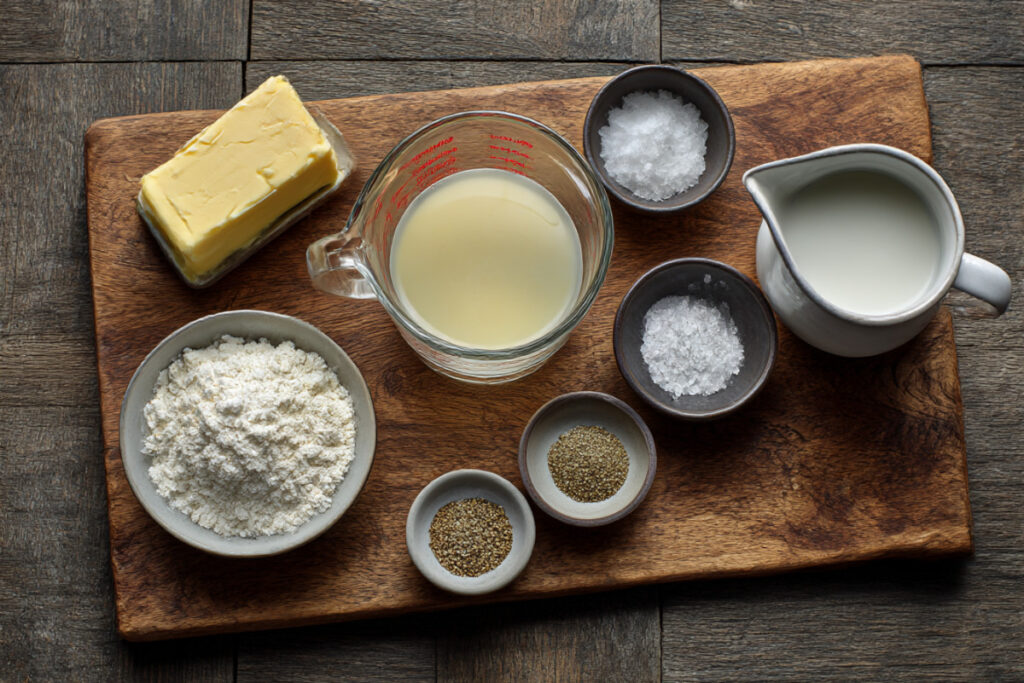
Fat + Flour + Liquid = Cream Soup Base
That’s it. The fat (usually butter) coats the flour particles and prevents lumps. The flour thickens the liquid through a process called starch gelatinization, which is a fancy way of saying the starch absorbs liquid when it gets hot. The liquid provides flavor and determines what kind of soup you’re making.
The Ratio for Condensed Soup Consistency
For a consistency that matches canned condensed soup, use:
- 2 tablespoons butter
- 3 tablespoons flour
- 1 1/4 cups total liquid (broth plus milk)
This gives you that thick, clingy texture that works in casseroles and slow cooker recipes. It’s meant to be concentrated, just like the canned stuff.

Why Cooking the Roux Matters
When you melt butter and stir in flour, you’re making what’s called a roux (pronounced “roo”). You need to cook this mixture for at least a minute or two before adding liquid. This does two things: it removes the raw, pasty flour taste, and it helps the starch particles swell so they thicken more efficiently.
Don’t skip this step. Undercooked roux gives your sauce a gummy, floury flavor that no amount of seasoning will fix.
The Thickening Timeline
Your sauce will look thin when it first comes together. Don’t panic. Starch thickens progressively as it heats and continues to thicken as it cools. If you’re making the soup ahead of time, it will gel up in the fridge like pudding. This is normal and correct. Just whisk it when you reheat.
Building Flavor
The base liquid determines the “type” of soup. Chicken broth makes cream of chicken. Beef or vegetable broth with mushrooms makes cream of mushroom. The aromatics (onion powder, garlic powder) provide background savory depth without overpowering the main flavor.
If you want to learn more about white sauces and how to use them, check out my Béchamel Sauce guide. It covers the parent technique in more detail.

Master Recipe: Cream of Anything Soup Base
This is the universal formula that works for everything. One batch equals one 10.5-ounce can of condensed soup.
Homemade Cream of Anything Soup Base
Ingredients
Equipment
Method
- Melt the butter in a small saucepan over medium heat. If making one of the variations with vegetables (mushroom, celery, onion), add your diced vegetables now and saute until softened, about 3-4 minutes.
- Add the flour to the melted butter and whisk constantly for 1-2 minutes. The mixture will bubble and turn slightly golden. This step is important because it cooks out the raw flour taste.
- Slowly pour in the chicken broth while whisking constantly. Add it in a steady stream, whisking the entire time to prevent lumps from forming.
- Add the milk and continue whisking. The mixture will look thin at first.
- Bring the mixture to a gentle simmer over medium heat, stirring frequently. Cook for 2-3 minutes until the sauce thickens enough to coat the back of a spoon.
- Remove from heat and stir in the onion powder, garlic powder, salt, and pepper. Taste and adjust seasoning as needed.
- Use immediately in your recipe, or let cool and refrigerate in an airtight container for up to 5 days.
Notes
For those who prefer the written version:
Ingredients
Base:
- 2 tablespoons butter (or olive oil for dairy-free)
- 3 tablespoons all-purpose flour (see notes for gluten-free)
- 3/4 cup chicken broth (or vegetable broth)
- 1/2 cup whole milk (or unsweetened non-dairy milk)
Seasonings:
- 1/4 teaspoon onion powder
- 1/8 teaspoon garlic powder
- 1/4 teaspoon salt (less if using salted broth)
- 1/8 teaspoon black pepper
Instructions
- Melt the butter in a small saucepan over medium heat. If you’re making one of the variations with vegetables (mushroom, celery, onion), add your diced vegetables now and sauté until softened, about 3-4 minutes.
- Add the flour and whisk constantly for 1-2 minutes. The mixture will bubble and turn slightly golden. This is your roux, and cooking it properly removes the raw flour taste.
- Slowly pour in the broth while whisking constantly. Add it in a steady stream, whisking the entire time to prevent lumps.
- Add the milk and continue whisking. The mixture will look thin at first. That’s fine.
- Bring to a gentle simmer over medium heat, stirring frequently. Cook for 2-3 minutes until the sauce thickens enough to coat the back of a spoon.
- Season with onion powder, garlic powder, salt, and pepper. Taste and adjust as needed.
- Use immediately in your recipe, or let cool and refrigerate in an airtight container for up to 5 days.
Yield
Approximately 1 1/4 cups, equivalent to one 10.5-ounce can of condensed soup.
Want to Eat It as Soup?
This recipe makes condensed soup meant for cooking into other dishes. To turn it into a bowl of soup you’d actually eat with a spoon, whisk in an additional 1 cup of milk or broth after the sauce thickens. Season to taste, heat through, and you’ve got cream of chicken (or mushroom, or celery) soup. Toss in some diced cooked chicken or vegetables if you want to bulk it up.
Variations: Turn the Base Into Any Soup You Need
The master recipe gives you a basic cream of chicken soup. Here’s how to customize it for other flavors.
Cream of Chicken
Use the master recipe exactly as written with chicken broth. For extra chicken flavor, add a pinch of dried thyme or poultry seasoning. If you want actual chicken pieces in there, stir in 2-3 tablespoons of finely diced cooked chicken at the end.
Best for: Chicken casseroles, pot pie, chicken and rice, chicken noodle casserole
Cream of Mushroom
Sauté 1/2 cup finely chopped mushrooms in the butter before adding flour. Any mushrooms work, but cremini or baby bella have more flavor than white button. Use beef or vegetable broth instead of chicken for deeper, earthier flavor. A splash of Worcestershire sauce (about 1/2 teaspoon) adds umami depth.
Using canned mushrooms: Drain a 4-ounce can of mushroom pieces, chop finely, and add to the butter. Since they’re already cooked, just sauté for 30 seconds to warm through before adding flour. Save a tablespoon or two of the mushroom liquid to add with your broth.
Using dried mushrooms: Use about 2 tablespoons dried mushrooms (porcini or mixed forest mushrooms work great). Rehydrate in 1/2 cup warm water for 15-20 minutes. Chop the mushrooms finely and sauté in butter. Strain the soaking liquid through a coffee filter to catch any grit, then use it as part of your broth. This actually gives you more intense mushroom flavor than fresh.
Best for: Green bean casserole, beef stroganoff, pork chops, meatloaf topping, Swedish meatballs
Cream of Celery
Sauté 1/2 cup finely diced celery in the butter until soft (about 4-5 minutes) before adding flour. Add 1/8 teaspoon celery salt or a pinch of celery seed for stronger celery flavor. Chicken or vegetable broth both work well.
Using dried celery: Use 1 1/2 to 2 tablespoons dried celery flakes. No need to rehydrate. Add them directly to the butter and let them bloom for about a minute before adding flour. They’ll soften as the sauce cooks. Bump up the celery salt to 1/4 teaspoon for stronger flavor.
Best for: Tuna casserole, chicken and rice, vegetable casseroles, scalloped potatoes
Cream of Onion
Sauté 1/2 cup finely diced onion in the butter until golden and soft (about 5-6 minutes) before adding flour. The longer you cook the onion, the sweeter and more caramelized it gets. Use beef broth for richer flavor. A pinch of dried thyme complements the onion nicely.
Best for: French onion-style dishes, pork chops, smothered beef, potato casseroles
Cream of Broccoli
Use chicken or vegetable broth as your base. Don’t sauté the broccoli in butter (it doesn’t work well). Instead, add 1/2 cup finely chopped steamed or blanched broccoli at the end, after the sauce has thickened. For cheesy broccoli soup, stir in 1/4 cup shredded sharp cheddar until melted.
Best for: Broccoli rice casserole, cheesy vegetable bakes, broccoli chicken bake
Cream of Potato
Use chicken broth as your base. After the sauce thickens, stir in 1/2 cup diced cooked potato. Mash some of the potato pieces against the side of the pan to help thicken the soup further. Add 1/4 teaspoon dried dill or chives for extra flavor.
Best for: Loaded potato soup base, scalloped potatoes, ham and potato casserole
The Universal Rule
If you’re adding vegetables, sauté them in the butter BEFORE adding flour. This softens them and integrates their flavor into the sauce. The only exception is delicate vegetables like broccoli, which should be added at the end.
Quick Reference Conversion Chart
| What the Recipe Calls For | Homemade Equivalent |
|---|---|
| 1 can (10.5 oz) condensed soup | 1 batch (~1 1/4 cups) |
| 2 cans condensed soup | Double the recipe |
| 1 can condensed + 1 can water/milk | 1 batch + 3/4 cup additional liquid |
| “Family size” can (22.6 oz) | Triple the recipe (~3 3/4 cups) |
| 1 cup condensed soup | Slightly less than 1 batch |
Important note: Condensed soup is concentrated. If the recipe tells you to add water or milk to the can, your homemade version replaces the concentrated soup, not the diluted final product.
Dietary Modifications
Gluten-Free
Replace the 3 tablespoons flour with 2 tablespoons cornstarch. Important: mix the cornstarch with the COLD milk first to create a slurry, then add the slurry to the hot broth. This prevents clumping.
Alternatively, use rice flour or a gluten-free all-purpose blend that contains xanthan gum (like Bob’s Red Mill 1-to-1). Use the same amount as regular flour.
The cornstarch version gives a slightly glossier, more translucent finish. The GF flour blend looks more like traditional cream soup.
Dairy-Free
Replace butter with olive oil, coconut oil, or dairy-free butter (Earth Balance works well). Replace milk with unsweetened almond milk, oat milk, or full-fat coconut milk.
For the richest texture, full-fat canned coconut milk is the winner. It does add a slight coconut flavor, which works great in some recipes (Thai-inspired dishes, curry casseroles) but might be noticeable in others.
Oat milk is the most neutral-flavored option with good body. Almond milk is thinner and may result in a slightly less creamy soup.
Lower Sodium
Use low-sodium or no-sodium broth. Skip the added salt entirely and let whoever’s eating season their own portion. Unsalted butter helps too.
The homemade version is already dramatically lower in sodium than canned (roughly 750mg vs 2,175mg). With low-sodium broth and no added salt, you can get it under 300mg.
Vegan
Combine the dairy-free modifications above with vegetable broth for all variations.
For a “cream of chicken” flavor without actual chicken, add 1/2 teaspoon nutritional yeast and a generous pinch of poultry seasoning. It won’t taste exactly like chicken, but it hits similar savory notes.
The mushroom variation works particularly well as a vegan base since mushrooms bring their own umami depth.
Keto/Low-Carb
The standard recipe isn’t low-carb due to the flour. For a keto version, replace flour with 1/4 teaspoon xanthan gum. Whisk the xanthan gum into the cold broth before heating (it clumps badly if added to hot liquid).
You can also use 1 tablespoon of flour instead of 3 and accept a thinner consistency. Substitute heavy cream for the milk to increase fat content.
Storage, Make-Ahead, and Freezing
Refrigerator Storage
Store in an airtight container (mason jars work great) for up to 5 days. The soup will thicken significantly when cold, becoming almost pudding-like. This is completely normal.
When you’re ready to use it, whisk well as you reheat. If it’s too thick, add a splash of milk or broth to loosen it up.
Freezing
Freeze in 1 1/4 cup portions (one “can” equivalent) so you can pull out exactly what you need. Freezer bags laid flat for stacking work well, or use small plastic containers.
The soup freezes well for 3-4 months. Thaw in the refrigerator overnight or microwave in 30-second bursts, stirring between each.
After thawing, the sauce may look slightly separated or grainy. Don’t panic. Whisk vigorously while reheating and it will come back together smoothly.
Make-Ahead Strategy
If you use cream soup regularly, batch it. Make 4-6 batches at once, portion into containers, and freeze. Label everything with the date and type (cream of mushroom, cream of chicken, etc.).
When a recipe calls for cream soup, just pull one from the freezer. Future you will be grateful.
Pro tip: If you know you’ll use cream of mushroom frequently, make a quadruple batch with mushrooms already incorporated. Freeze in single portions. That’s four casseroles worth of cream of mushroom soup, ready whenever you need it.
Bonus: Shelf-Stable Dry Mix
For preppers, campers, or anyone who wants the convenience of reaching into the pantry without the downsides of canned soup, here’s a dry mix version.
Dry Mix Recipe (Makes ~6 “Can” Equivalents)
Ingredients:
- 2 cups instant dry milk powder
- 3/4 cup all-purpose flour (or cornstarch for gluten-free)
- 1/4 cup chicken bouillon powder
- 2 teaspoons onion powder
- 1 teaspoon garlic powder
- 1/2 teaspoon black pepper
Instructions:
- Combine all ingredients in a large bowl.
- Whisk until evenly distributed (no clumps of bouillon).
- Transfer to an airtight container or divide into individual portions.
To Use
Combine 1/3 cup dry mix with 1 1/4 cups cold water in a saucepan. Whisk to combine, then bring to a boil over medium heat, stirring constantly. Reduce heat and simmer until thickened, about 2-3 minutes. Use as one can of condensed soup.
Storage
Keep in a cool, dry place in an airtight container. Good for up to 12 months.
Customization Ideas
Make separate batches with add-ins:
- Cream of mushroom mix: Add 2 tablespoons dried mushroom powder
- Cream of celery mix: Add 2 tablespoons dried celery flakes
- Cream of onion mix: Add 2 tablespoons dried minced onion
This pairs well with other shelf-stable cooking staples. If you’re building an emergency pantry or outfitting a camp kitchen, check out my Powdered Butter Bible for another essential.
Tips for Best Results
Whisk constantly. Lumps form when flour clumps together without being incorporated. Once you add liquid, don’t stop stirring until the sauce is smooth.
Don’t skip the roux cooking time. That 1-2 minutes of cooking butter and flour together eliminates the raw, pasty flour taste. Look for slight color change and bubbly texture before adding liquid.
Cold liquid, hot roux. Adding cold (or at least room temperature) liquid to a hot roux actually helps prevent lumps. The temperature differential keeps the starch from clumping as dramatically.
It thickens as it cools. If the sauce looks a bit thin while it’s hot, give it time. Starch continues absorbing liquid as temperature drops. By the time your casserole comes out of the oven, it will have thickened considerably.
Use quality broth. With so few ingredients, each one matters. Better Than Bouillon dissolved in water makes a noticeable difference over cheap boxed broth. Homemade stock is even better if you have it.
Season at the end. Broth saltiness varies dramatically by brand. Taste the finished sauce before adding salt. You can always add more; you can’t take it back.
For casseroles, slightly thinner is fine. The sauce will reduce and thicken during baking. Don’t stress about matching the exact gloppy consistency of canned soup.
Fixing a lumpy sauce. If you end up with lumps despite your best efforts, strain the sauce through a fine mesh sieve. Or hit it with an immersion blender for 10-15 seconds. Problem solved.
Frequently Asked Questions
What can I substitute for cream of chicken soup?
This homemade base made with chicken broth directly replaces canned cream of chicken soup at a 1:1 ratio. One batch equals one 10.5-ounce can.
How much homemade soup equals one can?
One batch of this recipe yields approximately 1 1/4 cups, which is equivalent to one standard 10.5-ounce can of condensed soup.
Can I freeze homemade cream soup?
Yes. Freeze in 1 1/4 cup portions (one can equivalent) for up to 3-4 months. Thaw in the refrigerator and whisk well when reheating. It may look slightly separated after thawing but will come together when heated.
Is homemade cream soup healthier than canned?
It contains no MSG, no modified food starches, no mystery “flavorings,” and you control the sodium (about 750mg vs 2,175mg in canned). Fewer processed ingredients overall, and no concerns about can liner chemicals leaching into your food.
Can I use water instead of broth?
You can, but the flavor will be much blander. Broth provides the base flavor. If you’re out of broth, dissolve a teaspoon of bouillon paste or a bouillon cube in hot water. Better Than Bouillon works especially well.
What if I don’t have chicken broth?
Use vegetable broth for a vegetarian version (works with any variation). Use beef broth for cream of mushroom or cream of onion for deeper flavor. In a pinch, water with bouillon paste works.
Can I make this in advance for a big holiday meal?
Yes. Make up to 5 days ahead and refrigerate. It will be very thick when cold. Whisk while reheating over medium-low heat, adding a splash of milk or broth if needed to reach the right consistency.
Why did my sauce turn out lumpy?
Usually from adding liquid too fast or not whisking constantly. To fix it, strain through a fine mesh sieve or blend with an immersion blender.
Can I double or triple the recipe?
Absolutely. The ratios scale perfectly. Use a larger saucepan and allow slightly more cooking time to thicken. For quadruple batches or larger, work in stages to maintain heat control.
Does this work in slow cooker recipes?
Yes, but make the cream soup base on the stovetop first. Don’t just dump the raw ingredients into your slow cooker and expect them to thicken properly. The roux needs direct heat to form correctly.
The Bottom Line
Canned cream soup isn’t evil, but it’s also not your only option. Once you realize that cream of anything soup is just flavored white sauce, and white sauce is just butter, flour, and liquid, the whole thing stops feeling mysterious.
Ten minutes. Ingredients you already have. Better taste. Lower sodium. No questionable can liners. Costs less. And you never have to abandon a recipe because the pantry is empty.
Give it a shot next time a recipe calls for cream of whatever. I think you’ll find it’s easier than you expected, and the results speak for themselves.
If you try this recipe, let me know in the comments which variation you made and what dish you used it in. I’m always curious to hear how people put these basics to work.
Looking for more from-scratch alternatives to convenience foods? Check out my Béchamel Sauce guide for the mother sauce behind all cream soups, or the Powdered Butter Bible for another pantry essential.