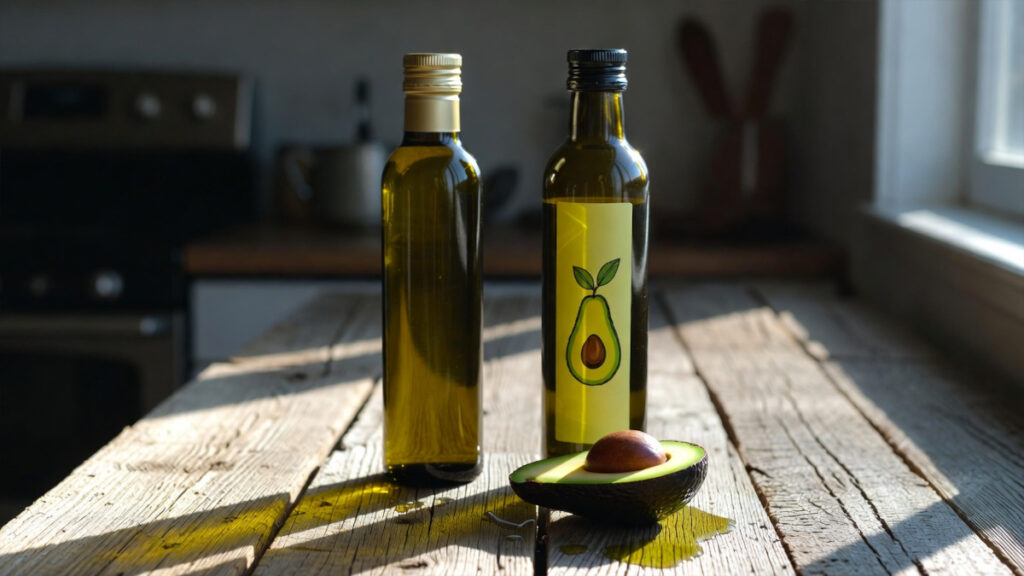
You’re on Amazon looking for avocado oil. You see Amazon’s own store-brand version sitting several dollars cheaper than Chosen Foods right next to it.
Same size bottle. Both say “100% avocado oil” on the label. You think — is this really worth paying more for? It’s just cooking oil.
Here’s the thing: that’s exactly what the people selling you fake avocado oil are counting on.
Eating well costs money. That’s just the reality. But spending money on food that isn’t what the label claims isn’t eating healthy on a budget — it’s getting scammed. And in the avocado oil category specifically, the science says that’s happening to a lot of people right now.
Let’s get into it.
Why Avocado Oil Shopping Is Trickier Than It Looks
Avocado oil has had a massive run over the last several years. People ditching vegetable oil and canola oil have been reaching for it as a cleaner, higher smoke point alternative. Demand exploded, and a flood of products hit the market to meet it.
The problem is that avocado oil is expensive to produce properly. Ripe avocados, careful extraction, real quality control — it adds up.
And when there’s a premium product with high demand and no real enforcement on labeling, the conditions are perfect for fraud.
Researchers at UC Davis did something about it. In a landmark 2020 study, they tested commercially available avocado oils and found that at least 82% of samples were either rancid before the expiration date or mixed with other oils. In some cases, bottles labeled “pure” or “extra virgin” avocado oil contained near 100% soybean oil. The kind of cheap oil people are specifically trying to avoid.
A 2023 follow-up study drilled into private-label products specifically. Of 36 private-label avocado oils tested from 19 retailers across the US and Canada, only 31% were actually pure. Nearly 70% were rancid or adulterated with cheaper oils like soybean, safflower, or sunflower.
There are currently no enforceable federal standards for avocado oil labeling in the US. That means a brand can print “100% pure avocado oil” on any bottle and face essentially no consequences if it isn’t true.
What’s the Deal with Amazon’s Store-Brand Avocado Oil
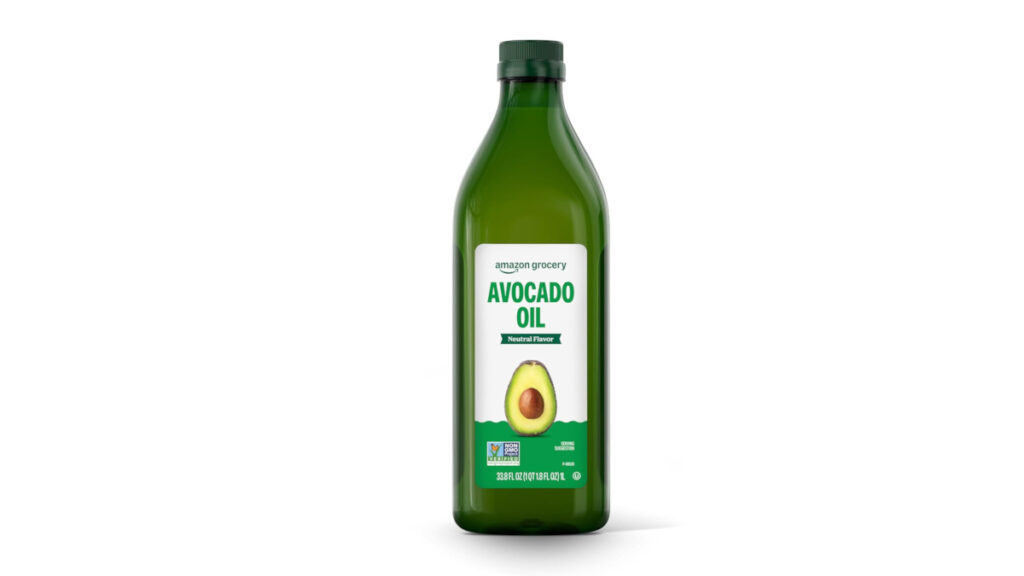
Amazon’s private-label avocado oil goes by Amazon Grocery (previously sold as Amazon Fresh — same product, rebranded packaging). The label says “100% non-GMO avocado oil.” The bottle is a decent size. The price is attractive.
But here’s what you need to understand: Amazon doesn’t make oil. A third-party manufacturer produces it and Amazon puts their label on it. That’s what a private-label product is. Not automatically a problem — but in this category, it matters a lot.
There is no publicly available batch testing data for Amazon’s avocado oil. No independent lab verification. No transparency about where the avocados come from or how the oil is processed.
The “non-GMO” claim on the label is a marketing note, not a rigorous third-party certification with auditing behind it.
Amazon’s brand has never been publicly named as passing any independent purity study. It falls squarely into the private-label category that UC Davis researchers specifically flagged as the highest-risk segment of the market.
That doesn’t mean every bottle is fake. It means there is zero public evidence that it isn’t, and the odds based on the research are not in your favor.
You might open a bottle and get perfectly good avocado oil. You might get soybean oil in an avocado oil bottle. You genuinely cannot tell the difference without lab equipment. That’s the problem.
So What’s Actually Worth Buying on Amazon
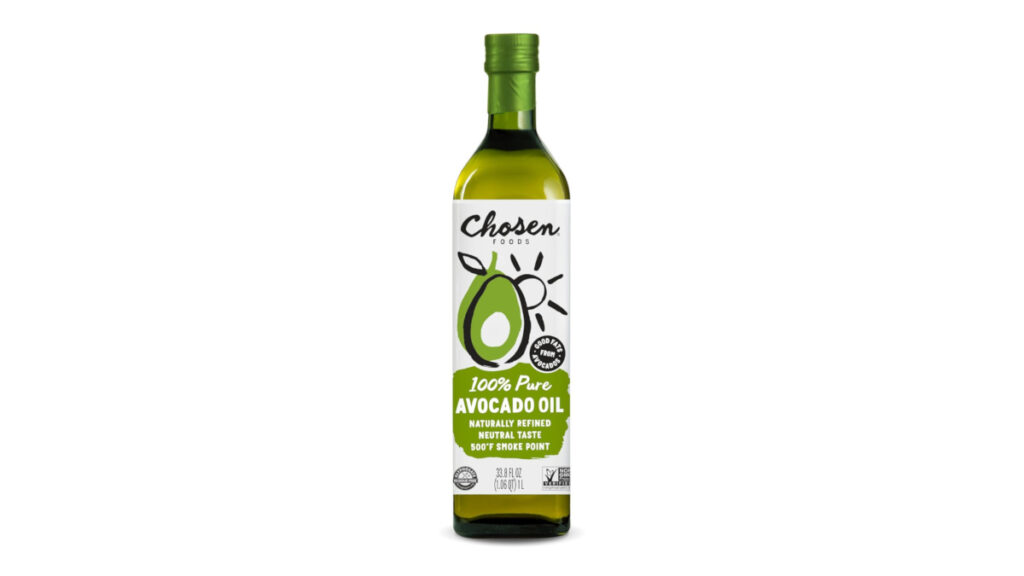
Chosen Foods 100% Pure Avocado Oil is the answer, and it’s not close.
Chosen Foods tests every single batch of oil internally and runs external third-party lab testing quarterly. They use fatty acid profile analysis — the same method UC Davis researchers use — to verify that what’s in the bottle is actually avocado oil and nothing else.
They publish their commitment to this process openly and have pushed for federal industry standards because they know they’re one of the few brands that would pass.
In the original 2020 UC Davis study, only two brands out of the entire field tested came back pure and non-oxidized. Chosen Foods was one of them. The other was Marianne’s, sold at Costco. That’s it. Two brands.
Beyond purity, it’s a genuinely solid product:
- Neutral flavor that doesn’t compete with your food
- Verified 500°F smoke point — solid for searing, roasting, stir-frying
- Non-GMO Project Verified (actual third-party auditing, not just a label claim)
- Glyphosate-residue free, kosher, soy-free, and canola oil-free
[Grab the Chosen Foods 1-liter on Amazon here] — solid everyday size, ships Prime.
If budget is a hard constraint, BetterBody Foods Refined Avocado Oil is a runner-up worth considering. It won’t have the same verified purity track record, but it consistently shows up as one of the more reliable budget options in the category.
Amazon Brand vs Chosen Foods: Side by Side
| Amazon Grocery | Chosen Foods | |
|---|---|---|
| Independent lab testing | None disclosed | Every batch + quarterly external |
| UC Davis purity verified | Never confirmed | Yes (2020 study, one of only two brands) |
| Third-party certifications | Basic non-GMO claim | Non-GMO Project Verified, glyphosate-free, kosher |
| Smoke point | Claims 500°F | Verified 500°F |
| Sourcing transparency | Not disclosed | Grove-to-bottle traceable |
| Purity risk | High (private label category) | Low |
| Price | Lower | Higher |
Does the Price Difference Actually Matter
Let’s be straight about this. The price gap between Amazon’s store brand and Chosen Foods on a per-ounce basis is not huge. We’re talking a few dollars on a bottle that lasts most households weeks or months.
Here’s how to think about it.
If you switched to avocado oil specifically to get away from canola or soybean oil — and you’re buying a product that may actually be canola or soybean oil in disguise — you haven’t saved money. You’ve wasted it. Every penny.
Eating healthy costs a little more. That’s real, and it’s frustrating, but it’s true. Grass-fed beef costs more than feedlot beef. Real olive oil costs more than the stuff cut with cheap filler. And real avocado oil costs more than a bottle of soybean oil with a nice label on it.
The extra few dollars on a bottle of Chosen Foods isn’t a premium for a fancy brand name. It’s the cost of actually getting what you’re paying for.
If your budget is tight, spend it on verified products and use them a little more carefully. That’s a better approach than buying cheap and hoping for the best in a category with a documented fraud problem.
How to Shop Smart for Any Avocado Oil
Whether you’re buying on Amazon or at the grocery store, keep these in mind:
Look for published testing data. Any brand worth buying will tell you how they verify purity. If that information doesn’t exist anywhere on their website, that tells you something.
Non-GMO Project Verified means something. It requires actual third-party auditing. A generic “non-GMO” label claim requires nothing.
Check the color. Refined avocado oil should be light yellow to nearly clear. A bright, deep yellow could indicate blending with another oil. Virgin or extra virgin avocado oil should have a green tint.
Be skeptical of very low prices. Avocado oil is legitimately expensive to produce well. If a price looks dramatically lower than competitors, there’s usually a reason.
Store it right. Dark glass or opaque bottles are better than clear plastic. Keep it away from heat and light and use it within six months of opening.
The Bottom Line
Amazon’s store-brand avocado oil is cheaper for a reason. It’s an unverified private-label product in a category where the majority of similar products have failed independent purity testing. It might be fine. It might not be. You have no way to know.
Chosen Foods has done the work to prove what’s in their bottles, and the independent science backs them up. For a few extra dollars you get actual avocado oil from a brand that has earned that claim.
For most people cooking at home and trying to make smart choices about what goes in their food, that’s the right call.
[Chosen Foods 1-liter on Amazon — verified pure, ships Prime]
If you buy in bulk, Marianne’s at Costco is the only other brand confirmed pure in the same UC Davis research. Worth keeping in mind if you go through oil quickly.
What oil are you currently using for high-heat cooking? Drop it in the comments — curious whether anyone else has gone down this rabbit hole.