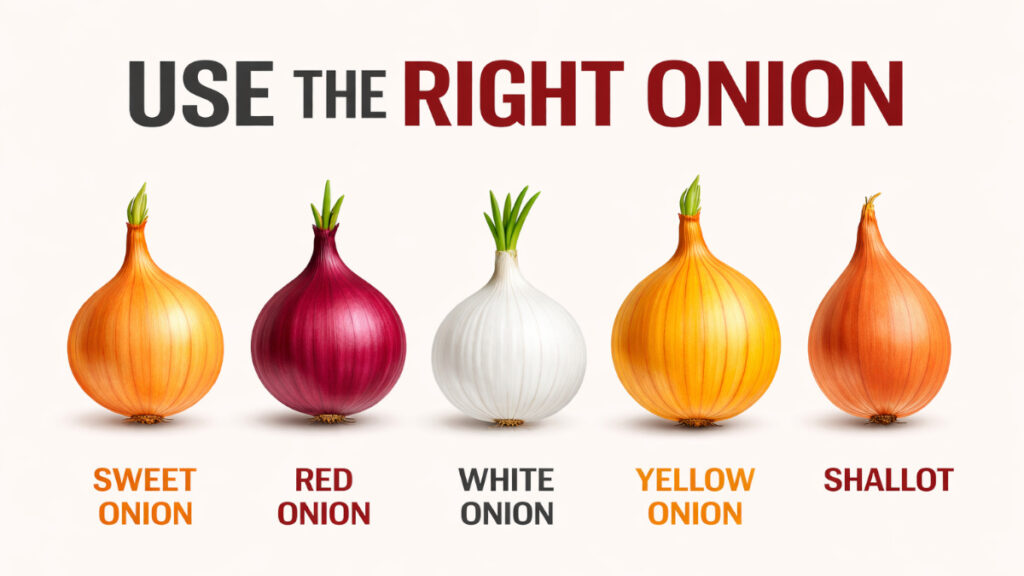
Grab the wrong onion and you’ll know it. Your chili tastes flat. Your guacamole bites too hard. Your stir fry comes out sharp and harsh when it should be clean and quick. Onions aren’t interchangeable, and most people pick them the same way they pick a lane at the grocery store — just kind of randomly.
This guide fixes that. Five onions, what they’re actually good for, and which one wins for chili.
Why the Type of Onion Matters
Every onion variety has a different sugar content, water content, and level of sulfur compounds. Those sulfur compounds are what cause the sharpness, the heat, and the tears. Less of them means a milder, sweeter onion. More means bite and punch.
That chemistry changes how each onion behaves in heat and how it tastes raw. A sweet onion melts into something almost jammy when you cook it low and slow. A white onion stays crisp and sharp even after a quick sauté. A shallot is doing something completely different from either of them. Using the right one isn’t fussy — it’s just using the right tool for the job.
The 5 Types of Onions and What They’re Good For
Yellow Onion: Your Default Cooking Onion
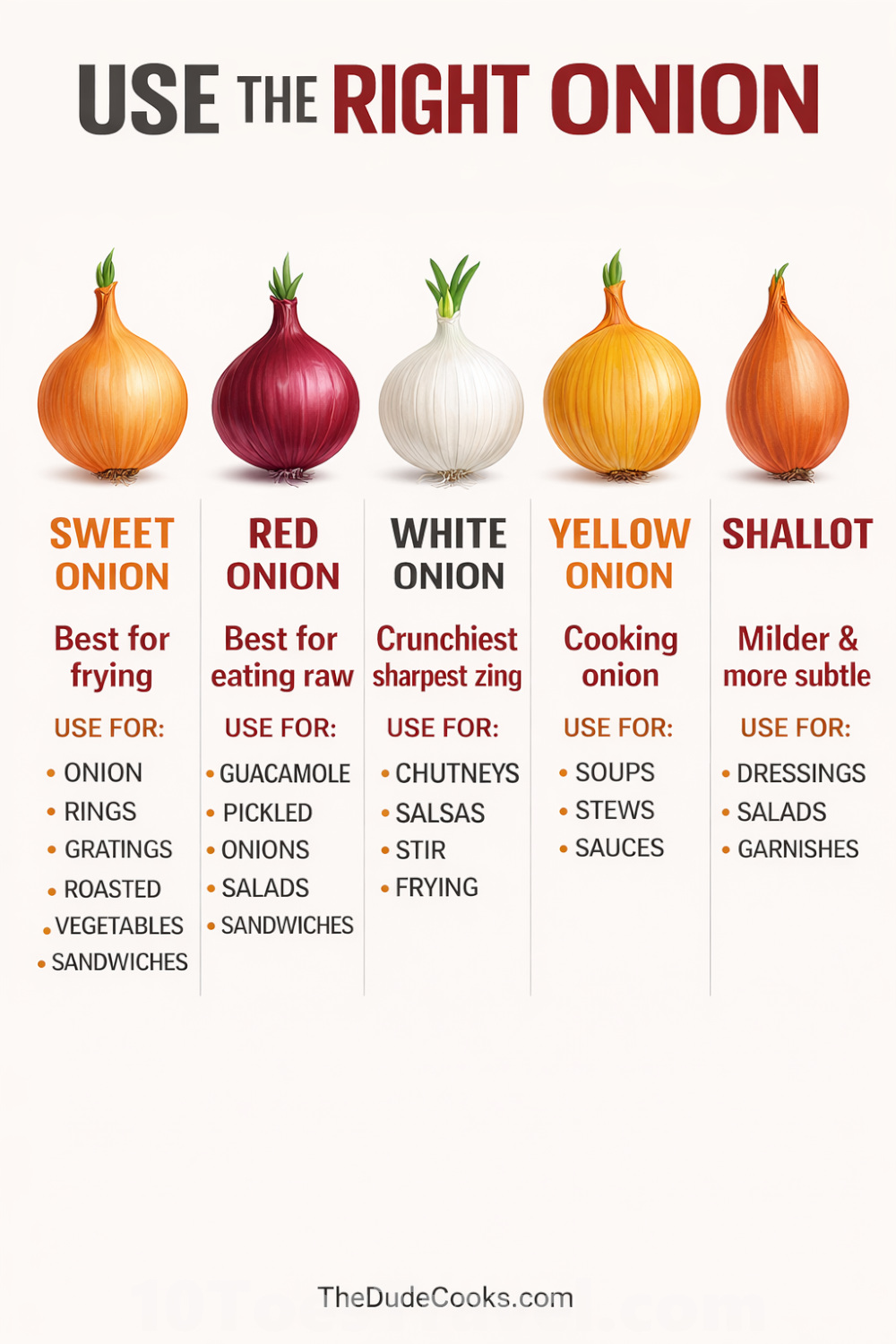
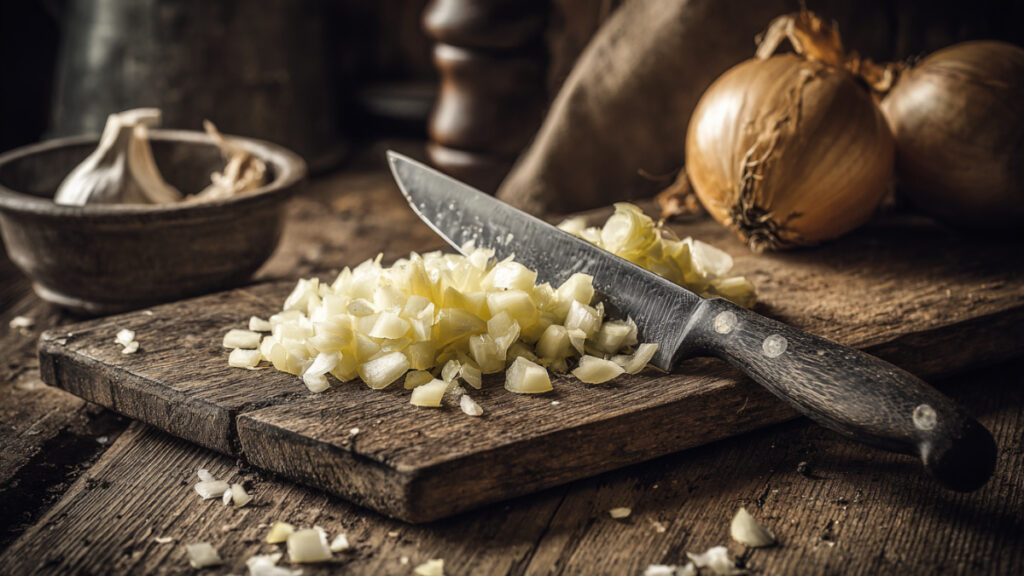
Yellow onions are the workhorse. When a recipe just says “one onion,” this is what it means. They have a solid balance of sharpness and sweetness, they hold up under heat better than any other variety, and they build depth into soups, stews, and braises in a way nothing else quite matches.
Best uses: chili, soups, stews, braises, sauces, caramelized onions, any long-cooked dish
The chili answer: Yellow onion. Every time. It cooks down into the base, mellows out, and adds body and depth without getting bitter or turning the color of your pot. If you’re building chili from scratch, start here. For a deeper look at exactly how different onions perform in chili and how to prep them, this post on the best onions for chili breaks it all down.
Raw: Too sharp for most people. Not the move in a salad or as a burger topping unless you like the burn.
Sweet Onion: Best for Frying and Roasting
Sweet onions (Vidalia, Walla Walla, Maui) have a higher sugar content and much lower sulfur than yellow onions. They’re genuinely mild raw and they caramelize faster than anything else on this list because of all that sugar.
Best uses: onion rings, roasted vegetables, caramelized onions, sandwiches, anywhere you want sweetness out front
What they’re not for: heavy stews where you need backbone. The sweetness can tip over into cloying when you’re building a savory base that needs some edge.
If you’ve ever wondered whether Vidalia or Walla Walla is the better sweet onion, that’s a legitimate debate and one worth reading about. Short version: different flavor profiles, both excellent, each has its best application.
Red Onion: Best for Eating Raw
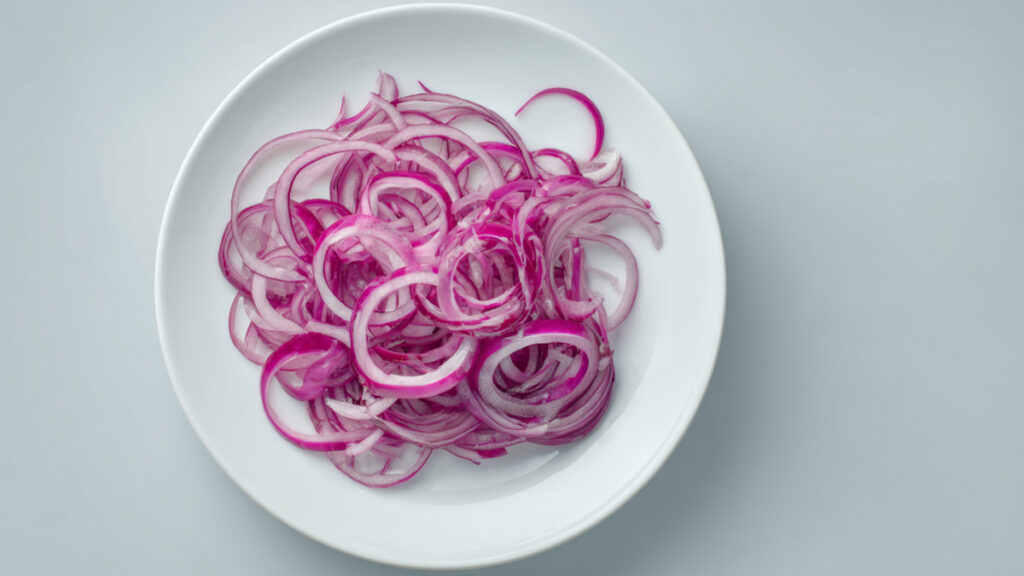
Red onions have a sharper, slightly peppery flavor compared to yellow. They’re the raw onion. The color comes from anthocyanins and looks great on a plate, but the real reason to reach for red is that bite.
Best uses: guacamole, pickled onions, salads, tacos, burgers, sandwiches, anything raw or barely cooked
Quick pickled red onions: Slice thin, cover with apple cider vinegar, add a pinch of salt and a little sugar. Thirty minutes at room temperature. That’s it. Use them on tacos, pulled pork, grain bowls, eggs, basically anything that needs a sharp, bright finish.
Heat mellows them out significantly. When you cook red onion hard, you lose most of what makes it worth using.
White Onion: The Sharpest Zing
White onions are crisp, sharp, and have the least natural sweetness of any variety on this list. They’re common in Mexican cooking because that clean, sharp bite is part of the flavor profile, not something to cook away.
Best uses: salsas, pico de gallo, chutneys, stir fry, Mexican dishes, anywhere you need raw crunch
They hold their texture well under heat too, which makes them useful in a quick stir fry where you want the onion to still have some snap at the end. Raw in pico de gallo, they add a pop that yellow onion won’t give you.
Shallot: The Subtle One
Shallots look like a small elongated onion and taste like a mild onion crossed with a hint of garlic. They’re not a direct swap for regular onions in most applications — they’re doing a different job entirely.
Best uses: pan sauces, vinaigrettes, dressings, any application where you want flavor without bulk or sharpness
If a recipe from a restaurant-trained cook or a more refined cookbook calls for shallot, don’t reach for a yellow onion. The whole point of the shallot is that it dissolves into the background and adds complexity without announcing itself. That’s a feature, not a limitation.
Quick Reference: Onion by Dish
| Dish | Best Onion |
|---|---|
| Chili | Yellow |
| French onion soup | Yellow or sweet |
| Beef stew | Yellow |
| Guacamole | Red |
| Pico de gallo | White |
| Salsa | White |
| Onion rings | Sweet |
| Caramelized onions | Yellow or sweet |
| Stir fry | White |
| Pan sauce | Shallot |
| Vinaigrette | Shallot |
| Pickled onions | Red |
| Raw on a burger | Red or sweet |
| Soup base | Yellow |
| Tacos (raw topping) | Red or white |
Can You Substitute One for Another?
Sometimes yes, sometimes no.
Yellow for white: Works fine in cooked dishes. Not great raw — too sharp.
White for yellow: Works in most cooked applications. Slightly sharper result.
Sweet for yellow in chili: Possible, but the sweetness can get one-note over a long cook. Better as a topping or for caramelizing.
Red for yellow in chili: Not ideal. Red onions can turn slightly bitter under long cooking times and they’ll muddy the color of your pot.
Shallot for onion: Not a direct swap. Shallots are smaller and more delicate. If you’re substituting, use about three shallots for every one medium onion.
The Tool That Makes Onion Prep Actually Fast
If you’re doing any volume of onion prep — chili, stew, big batch cooking, pickled onions — a dedicated chopper and slicer is worth having. A good knife is still the right answer for most kitchen tasks, but for onions specifically, a chopper has one real advantage: it keeps the whole onion contained while you cut, which means less surface area exposed and fewer of those compounds hitting the air around your face.
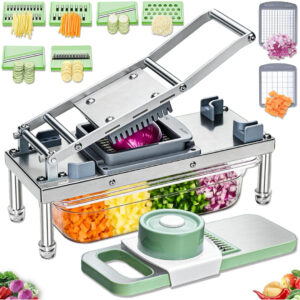
The one I’d point you toward is this 8-blade stainless steel vegetable chopper. It dices, slices, and includes a built-in container that catches everything as you cut — no onion pieces rolling across the counter, no mess. The blades are stainless steel so they stay sharp, and the whole thing breaks down for easy cleanup.
For the pickled red onions mentioned earlier in this post, the mandoline attachment is genuinely useful. You want thin, consistent slices for pickled onions and doing that by hand with a knife takes more patience than most people have. The mandoline gets you there in about 30 seconds.
One warning with any mandoline or chopper: the blades are no joke. Use the hand guard. Every time, no exceptions.
How to Stop Crying When You Cut Onions
Since we’re talking onions, here are the methods that actually work:
Chill the onion first. 15 minutes in the fridge slows down the release of the compounds that hit your eyes.
Use a sharp knife. A dull blade crushes cells instead of slicing cleanly, releasing more of those compounds. Sharp knife, fewer tears.
Cut near a vent or fan. Move the airflow away from your face instead of toward it.
Leave the root end for last. The root is where the irritating compounds concentrate most. Cut everything else first, then deal with the root.
How to Store Onions So They Last
Whole onions: cool, dry, dark, with airflow. A mesh bag in a pantry or on a counter away from direct sunlight. Don’t store them next to potatoes — they’ll make each other rot faster.
Cut onions: airtight container in the fridge, used within 3 to 4 days.
Shallots: same as whole onions.
Don’t store onions in a sealed plastic bag at room temperature. They’ll sweat and go bad fast.
FAQ
What onion is best for chili? Yellow onion. It cooks down into the base and adds depth and body without turning bitter. It’s the right choice for almost any slow-cooked dish. See the full breakdown here.
Can I use red onion in chili? You can, but it’s not the best call. Red onions can turn slightly bitter under long cooking times and they’ll affect the color of the chili. Yellow onion is the better option.
What’s the mildest onion? Sweet onion is the mildest overall. Shallot is also very mild with a subtle garlic note. Red onion is actually sharper than most people expect when eaten raw.
What onion is best for burgers? Raw: sweet onion or red. Cooked: yellow or sweet. Caramelized: yellow or sweet onion.
What onion is best for soup? Yellow onion for most soups and stews. For French onion soup, yellow or sweet onion — the long caramelization process needs that sugar content.
What’s the difference between a shallot and an onion? Shallots are smaller, milder, and have a subtle garlic note. They’re used where you want flavor without bulk or sharpness — sauces, dressings, that kind of thing.
What is the best sweet onion, Vidalia or Walla Walla? Both are excellent but they’re not identical. This post on Vidalia vs Walla Walla gets into the real differences between them.
Related Posts
- What Are The Best Onions for Chili?
- Vidalia vs Walla Walla Sweet Onions
- How To Perfectly Caramelize Onions
The Bottom Line
Yellow for cooking. Red for raw. White for sharpness and crunch. Sweet for frying and roasting. Shallot for the refined stuff.
Save the infographic at the top of this post. Bookmark this page. Next time a recipe says “one onion,” you’ll know exactly which one it means.
Drop a comment below with the dish you always reach for a yellow onion on. And if this is the kind of practical cooking info you want more of, pin it for later.
Was This Post Helpful? Share it!