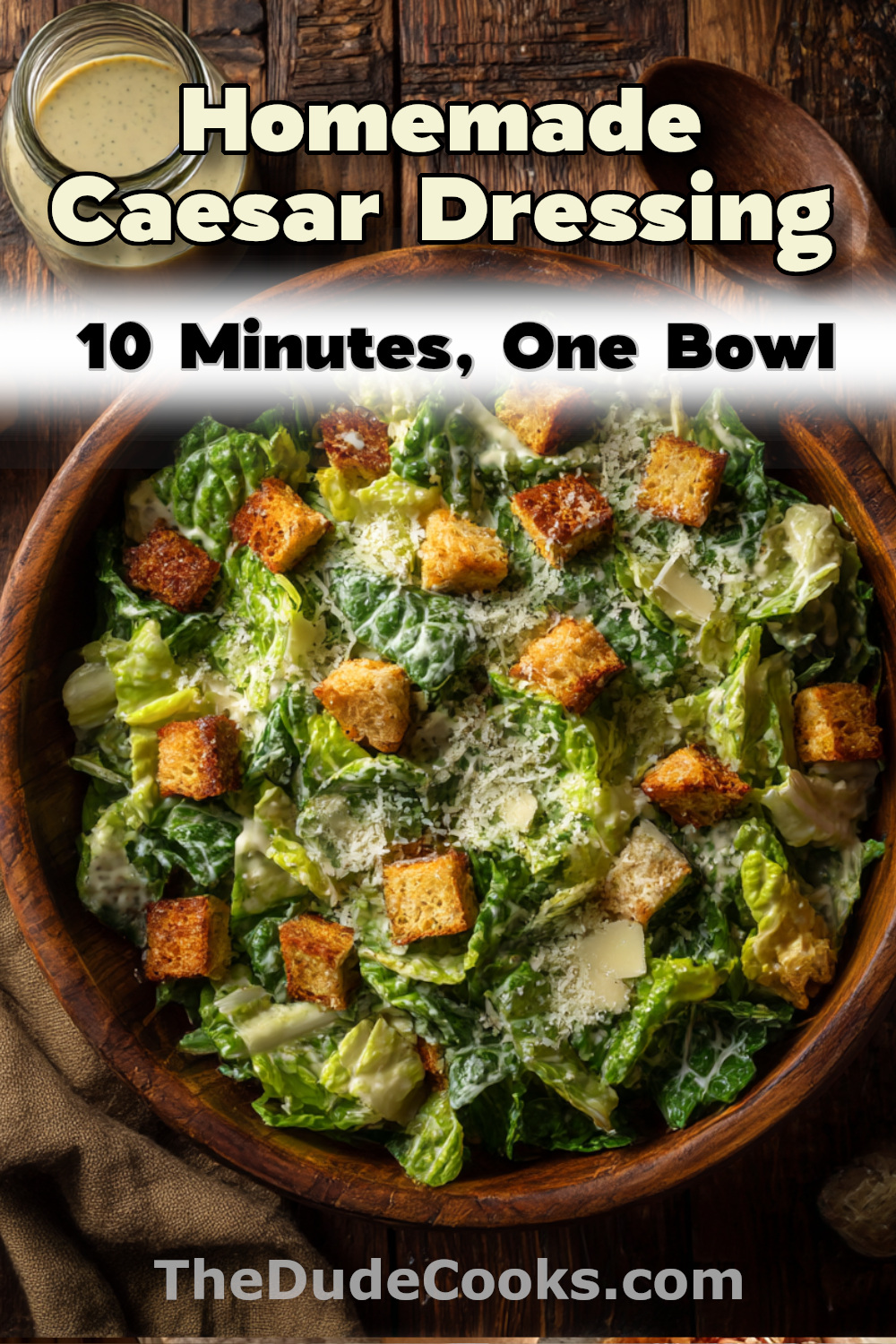
You have been shortchanging yourself every time you reached for a bottle of store-bought Caesar dressing. I know that sounds harsh, but once you make it from scratch you will understand what I mean. The bottled stuff is stabilizers, vegetable oils, and a vague memory of what Caesar dressing is supposed to taste like.
The real version takes about ten minutes, uses one bowl, and absolutely wrecks anything that came out of a jar. Creamy, tangy, loaded with that deep savory punch that makes Caesar salad worth eating in the first place. This is the recipe I actually make at home, no fancy technique required.
Why You Will Love This Recipe
- 10 minutes start to finish — no cooking, no blender required
- One bowl, one whisk — cleanup is nothing
- Way better than bottled — you will taste the difference immediately
- You control the ingredients — no seed oils, no mystery stabilizers, no preservatives
- Scales easily — double or triple it for a crowd
What You Need: Ingredients
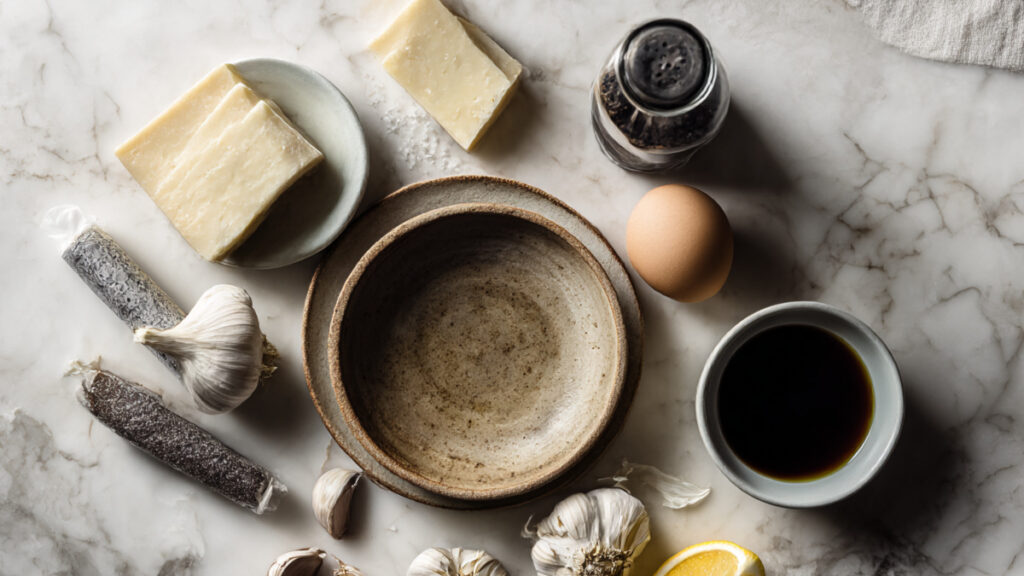
Here is the honest breakdown of what goes into this dressing and why each ingredient is pulling its weight.
Garlic — Fresh cloves, minced fine or run through a press. This is not a recipe for garlic powder. Three cloves gives you a bold, properly garlicky dressing. Back off to two if you want it milder.
Anchovy paste — This is the ingredient people are nervous about and should not be. You are not making anchovy dressing. The anchovies dissolve completely and contribute a deep, savory umami that you simply cannot fake. Tube anchovy paste is the practical home cook’s choice here — it already has a smooth consistency, lasts for weeks in the fridge after opening, and blends in seamlessly. A quality brand like Giovanni’s or Crown Prince works great. If you prefer whole oil-packed anchovy fillets, just mash them into a paste first.
Lemon juice — Fresh, not from a bottle. You need the brightness.
Worcestershire sauce — Use Lea and Perrins if you can. Many budget brands swap out anchovies for hydrolyzed soy protein, which changes the flavor profile. Check the label. Read my breakdown on cheap vs quality Worcestershire sauce.
Dijon mustard — Helps the emulsification and adds a subtle sharpness.
Egg yolk — This is what gives traditional Caesar its creamy body. It acts as an emulsifier, binding the oil into a stable, creamy dressing instead of a greasy puddle. If raw egg concerns you, use a pasteurized egg or swap in a tablespoon of mayonnaise — it works well and skips the raw egg question entirely.
Extra virgin olive oil — This is not the place to cut corners. The oil is a primary flavor component in this dressing. A decent California or Italian EVOO makes a real difference. You will use half a cup, so you will taste it.
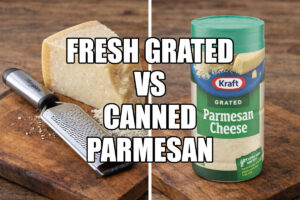
Parmesan cheese — Buy a block and grate it yourself with a Microplane. Pre-grated parmesan contains anti-caking agents that affect both texture and flavor. For Caesar dressing, where parmesan is a main character rather than a background player, this matters. Parmigiano Reggiano is worth it if you can find it.
Fresh Parmesan vs. Pre-Grated: What’s the Difference?
Black pepper and salt — Freshly ground pepper. Hold off on salt until the end — anchovy paste and parmesan both bring significant sodium.
See the exact measurements in the recipe card below.
Tools You Will Need
You do not need much here. This is a by-hand recipe.
- Mixing bowl — Medium sized, with enough room to whisk vigorously
- Whisk — Your main tool for this whole recipe
- Microplane or fine grater — For the parmesan. This single tool makes a bigger difference in your kitchen than almost anything else at this price point.
- Garlic press or sharp knife — Either works. A press saves time.
- Measuring spoons — For accuracy on the smaller ingredients
- Glass jar with lid — For storage if you are not using it immediately
No blender needed. No food processor. Just a bowl and a whisk and ten minutes.
How to Make Caesar Dressing From Scratch
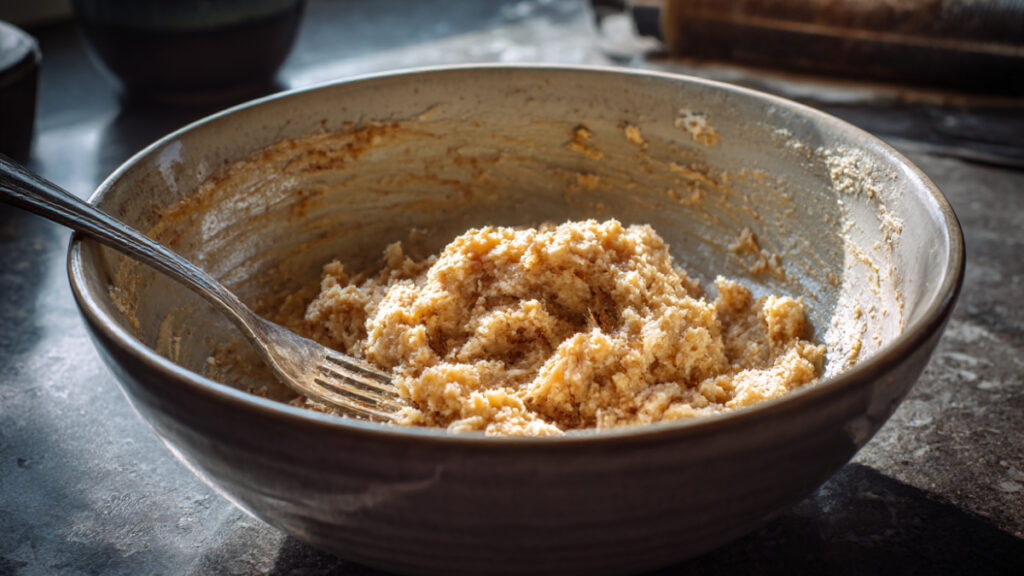
Step 1: Build the Base
Add your minced garlic and anchovy paste to the bowl. Use the back of a fork or your whisk to mash and work them together into a rough paste. You want them fully incorporated before anything else goes in. This is worth doing thoroughly — it is the flavor foundation of the whole dressing.
Step 2: Add the Liquids
Add the lemon juice, Worcestershire sauce, and Dijon mustard. Whisk until everything is combined. At this point it will look thin and not particularly appetizing. That is fine.
Step 3: Whisk in the Egg Yolk
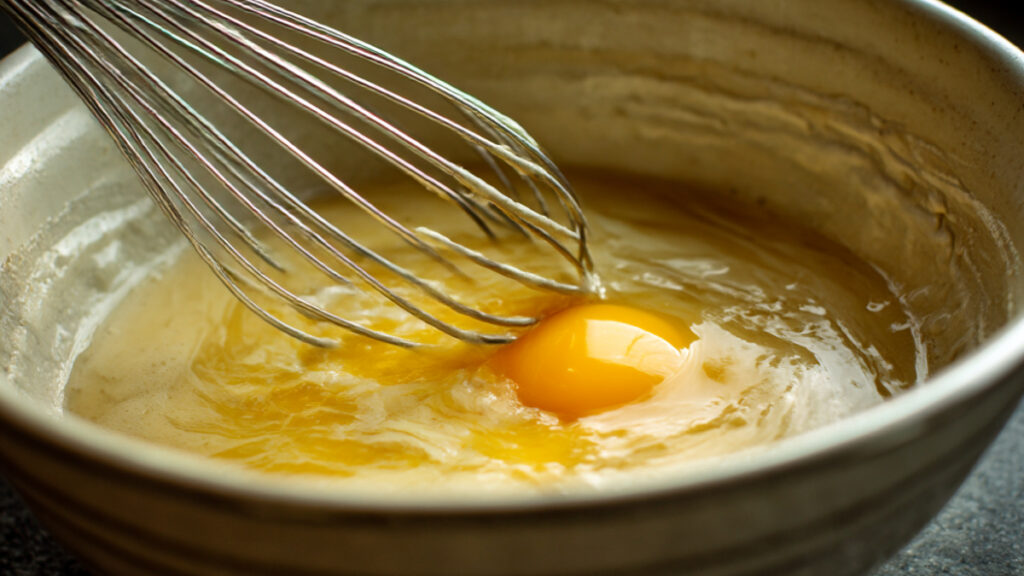
Add the egg yolk and whisk hard for about 30 seconds. You are looking for the mixture to lighten slightly in color and thicken a little. This is the start of your emulsification.
Step 4: Stream in the Oil (This Is the Important Part)
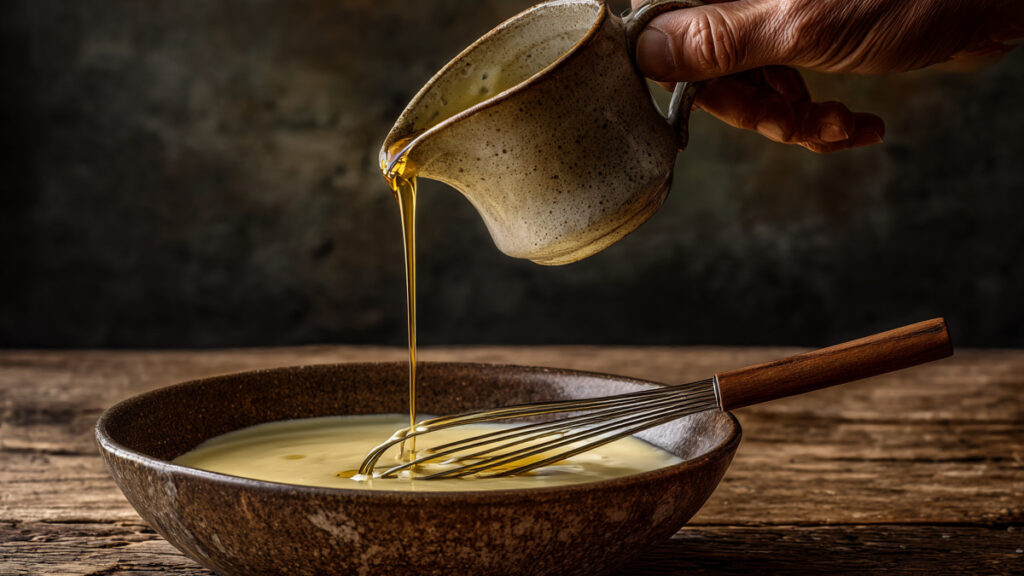
This step is where Caesar dressing either comes together as a creamy emulsion or breaks into an oily mess. The secret is slow.
Start whisking, then add your olive oil just a few drops at a time for the first 30 seconds or so. Once you can see the mixture starting to thicken and turn creamy, you can increase to a thin, steady drizzle. Keep whisking the entire time.
Pro tip: If you find it hard to whisk and pour simultaneously, wrap a damp kitchen towel around the base of your bowl to anchor it. That frees up both hands.
By the time all the oil is in, you should have a thick, creamy dressing that coats the back of a spoon.
Step 5: Finish with Parmesan and Season
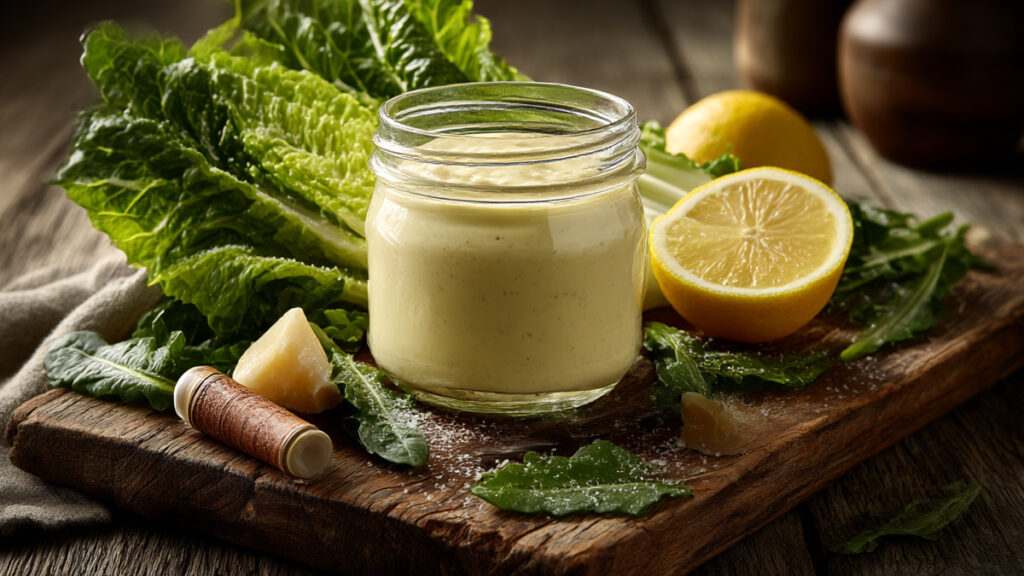
Fold in your freshly grated parmesan and the black pepper. Now taste it before you reach for the salt shaker. Between the anchovy paste and the parmesan, the dressing is likely already well-seasoned. Add kosher salt only if it genuinely needs it.
Tips, Tricks, and Variations
Tips and Tricks
- Room temperature egg yolk emulsifies more easily than a cold one. Pull it out of the fridge while you are prepping your other ingredients.
- If the dressing breaks (looks curdled or oily rather than creamy), start fresh with a new egg yolk in a clean bowl and slowly whisk the broken dressing into the new yolk. It will usually come back together.
- Taste as you go. Every lemon is a little different. Taste after you fold in the parmesan and adjust lemon, pepper, or Worcestershire to your preference.
- Want it thinner? Whisk in a teaspoon of cold water at the end until you hit your preferred consistency.
Variations
- No raw egg version: Substitute 1 tablespoon of good mayonnaise for the egg yolk. The dressing will still emulsify and the flavor is very close.
- More garlic: Four cloves instead of three. You know who you are.
- Lighter version: Swap half the olive oil for plain Greek yogurt after emulsifying. The texture changes slightly but it still works.
- Spicy kick: A pinch of red pepper flakes or a few dashes of hot sauce at the end.
Storage
- Refrigerate in a sealed jar for up to 3 to 4 days
- The dressing will thicken when cold — that is normal. Give it a stir before using.
- Do not freeze it. The emulsion will break.
Frequently Asked Questions
Can I make this without anchovies? You can, but you should not. What the anchovies add is not a fishy flavor — it is depth and savory richness that nothing else quite replicates. If you are vegetarian, a small amount of miso paste (about half a teaspoon) is the best substitute I have found.
Is it safe to eat raw egg yolk? This is a traditional preparation and the risk from a single fresh egg yolk is generally low for healthy adults. If you are pregnant, immunocompromised, or just not comfortable with it, use a pasteurized egg or the mayonnaise substitution in the notes.
Can I use a blender or food processor? Yes. Add everything except the oil, blend briefly, then drizzle the oil in through the feed tube while running. It is faster but the cleanup is worse. A bowl and whisk works just as well.
Why does my dressing look oily instead of creamy? The emulsion broke, which means the oil went in too fast. See the “if the dressing breaks” tip above to fix it.
Can I use bottled lemon juice? Fresh really does taste better here. The bright acidity of fresh lemon is one of the defining characteristics of good Caesar dressing. It takes 30 seconds to squeeze half a lemon.
How much does this make? This recipe makes about 3/4 cup of dressing, which is enough to dress a large Caesar salad for 4 to 6 people.
Can I double it? Easily. Same process, just use a larger bowl.
What to Serve It On
The obvious answer is a classic Caesar salad — romaine, croutons, and extra parmesan. But once you have a jar of this in your fridge, you will find other uses fast.
- Toss with grilled chicken and romaine for a quick weeknight meal
- Use as a dipping sauce for raw vegetables
- Spread on a sandwich instead of mayo — particularly good with turkey or chicken
- Drizzle over roasted broccoli or cauliflower
- Use as the base for a Caesar pasta salad
If you are building the full salad experience, take the time to make your own croutons. Store-bought croutons are fine in a pinch, but when you are already making the dressing from scratch it feels wrong to stop there.
Tools and Ingredients Worth Having
A few things that come up in this recipe that are worth investing in if you do not already own them:
Microplane Premium Classic Zester/Grater — Single most underrated tool in a home kitchen. Grates parmesan into a fine, fluffy cloud that melts into dressings and sauces instantly. Also works for lemon zest, garlic, ginger, chocolate, and nutmeg. Around $15 and it will last forever.
Anchovy Paste, Roland or Crown Prince — Keep a tube in your fridge. Beyond Caesar dressing, anchovy paste quietly improves pasta sauces, braised meats, and salad dressings of all kinds. A little goes a long way.
Lea and Perrins Worcestershire Sauce — The original formula uses anchovies and tamarind. Many cheaper brands substitute hydrolyzed soy protein. If you are going to the trouble of making from-scratch Caesar dressing, use the real stuff.
A Good Olive Oil — You do not need to spend a fortune, but you do need to spend more than $4. California Olive Ranch is reliable, widely available, and reasonably priced. For something a step up, look for a single-origin Italian EVOO.
Homemade Caesar Dressing (From Scratch)
Equipment
- Mixing bowl
- Whisk
- Microplane or fine grater
- Measuring spoons
- Garlic press or knife
- Glass jar with lid (for storage)
Ingredients
- 3 cloves garlic minced or pressed (about 1 tablespoon)
- 1 tablespoon anchovy paste from a tube — or 3-4 oil-packed anchovy fillets, mashed
- 2 tablespoons fresh lemon juice about 1 lemon
- 1 teaspoon Worcestershire sauce Lea and Perrins recommended
- 1 teaspoon Dijon mustard
- 1 egg yolk room temperature
- 1/2 cup extra virgin olive oil good quality — the flavor matters here
- 1/2 cup freshly grated parmesan cheese Parmigiano Reggiano if you can get it
- 1/2 teaspoon freshly ground black pepper
- 1/4 teaspoon kosher salt taste before adding — anchovy paste and parmesan are already salty
Instructions
- Add the minced garlic and anchovy paste to your mixing bowl. Use the back of a fork or a whisk to mash them together into a paste. This step is worth doing right — you want them fully combined before anything else goes in.
- Add the lemon juice, Worcestershire sauce, and Dijon mustard to the bowl. Whisk everything together until combined.
- Add the egg yolk and whisk vigorously for about 30 seconds until the mixture looks slightly thickened and pale.
- Now comes the key step: drizzle in the olive oil very slowly while whisking constantly. Start with just a few drops at a time for the first 30 seconds, then increase to a thin, steady stream. This is how you get the dressing to emulsify and turn creamy. If you dump the oil in all at once, it will break and you will have a greasy mess.
- Once all the oil is incorporated, fold in the freshly grated parmesan and black pepper. Taste the dressing before adding salt — the anchovy paste and parmesan both bring significant saltiness. Add kosher salt only if needed.
- Use immediately or transfer to a sealed jar and refrigerate. The dressing will thicken slightly as it chills. Give it a good stir before serving. Best within 3-4 days.
Notes
On anchovy paste: Tube anchovy paste is the practical choice here and works perfectly. It dissolves completely into the dressing. If you use whole oil-packed anchovy fillets, mash them into a paste first. Either way, do not skip the anchovies — they are not optional. You will not taste fish. You will taste depth and savory richness that nothing else replicates.
Parmesan matters: Buy a block and grate it yourself. Pre-grated parmesan has anti-caking agents that affect texture and flavor. A Microplane makes fast work of this.
Oil matters: This is not the recipe to use the cheap stuff. A decent extra virgin olive oil makes a noticeable difference in the final flavor.
If the dressing breaks: Start fresh with a new egg yolk in a clean bowl and slowly whisk the broken dressing into the new yolk. It will usually come back together.
Make It and Tell Me How It Goes
That is it. One bowl, ten minutes, and you have a Caesar dressing that will make you question every bottled version you have ever bought. The anchovy paste is not optional, the fresh parmesan is worth it, and slow-streaming the oil is the only technique you actually have to nail.
Give this a try and drop a comment below — I want to know if you went with the tube paste or whole fillets, and whether you did the egg yolk or the mayo version.
Pin this recipe for later and tag us when you make it. 📌