Picture this: you walk into a restaurant in Bologna, Italy, sit down, and confidently order “spaghetti bolognese.” The waiter stares at you like you just asked for pineapple on pizza. Maybe he sighs. Maybe he just shakes his head. Either way, you’ve committed a culinary faux pas that Italians take very seriously.
Here’s the thing: the terms “meat sauce,” “bolognese,” “ragu,” and “Sunday gravy” get tossed around like they’re interchangeable. They’re not. Each one has a distinct history, ingredient list, and purpose. And if you’ve ever wondered why your homemade “bolognese” doesn’t taste like what you had in Italy, the answer is probably that you weren’t making bolognese at all.
This guide breaks down everything you need to know about Italian meat sauces. We’ll cover authentic ragu alla bolognese (the official, government-registered version), Italian-American meat sauce, Sunday gravy, the umbrella term “ragu,” and even marinara for good measure. By the end, you’ll know exactly which sauce to make, when to make it, and why Italians get so worked up about pasta shapes.
Meat Sauce vs Bolognese: The Short Version
For those who just want the basics, here’s the quick breakdown. Authentic bolognese and Italian-American meat sauce share some DNA, but they’re fundamentally different sauces.
| Factor | Authentic Bolognese | Italian-American Meat Sauce |
|---|---|---|
| Origin | Bologna, Italy | Italian immigrants in America |
| Tomato Amount | Minimal (supporting role) | Heavy (starring role) |
| Meat | Beef + pork blend, finely diced | Usually just ground beef |
| Key Liquid | White wine + milk | Red wine (sometimes) |
| Herbs | None (seriously) | Oregano, basil, garlic |
| Cook Time | 2-4 hours minimum | 30 min to 2 hours |
| Sauce Color | Orange-brown | Deep red |
| Traditional Pasta | Tagliatelle, never spaghetti | Spaghetti, any pasta |
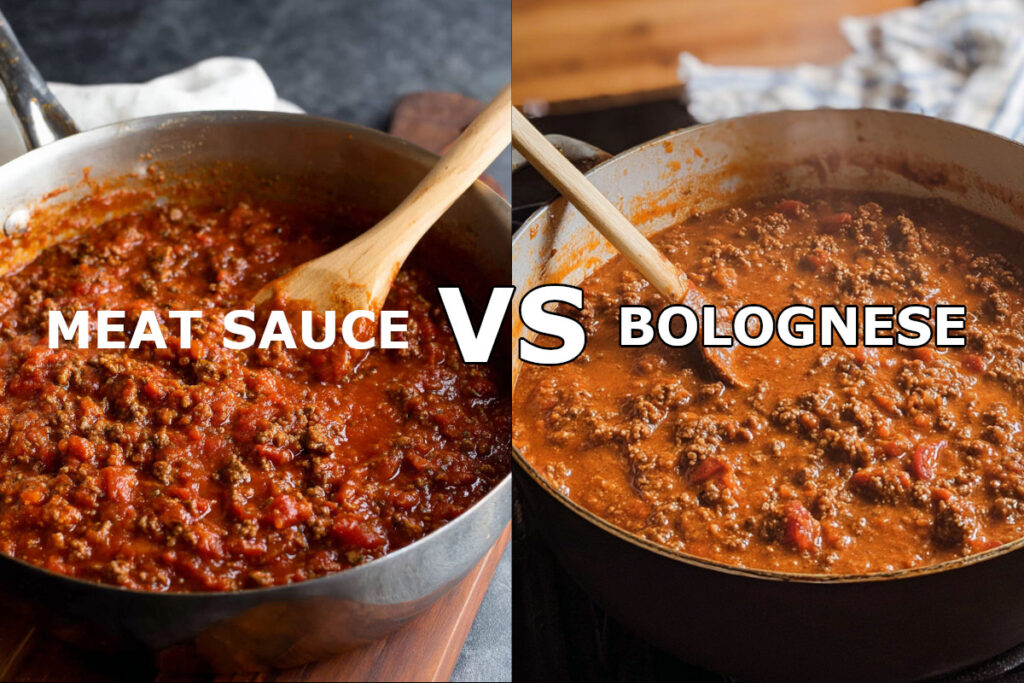
The short version: authentic bolognese is meat-forward with tomatoes playing a supporting role, while Italian-American meat sauce is tomato-forward with meat as the supporting player. They’re both delicious. They’re just different.
Authentic Bolognese Sauce: What It Actually Is
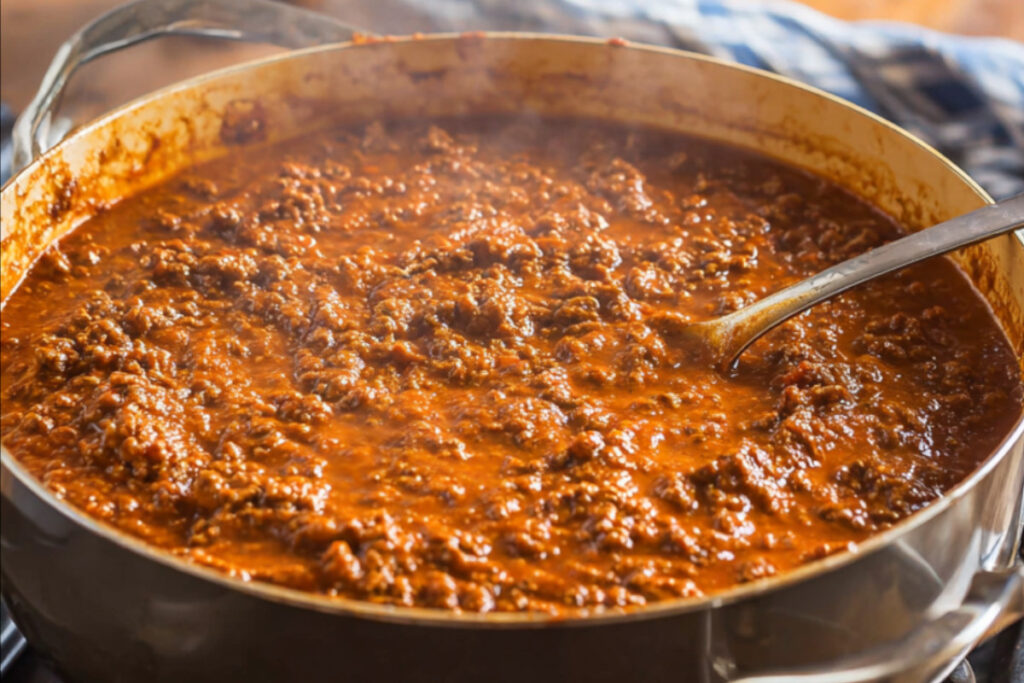
Ragu alla bolognese isn’t just some Italian recipe that got popular. It’s a protected cultural treasure with an official definition registered by the Italian government. Let’s start with the basics.
The History and Etymology
The word “ragu” comes from the French verb “ragouter,” which means “to awaken the appetite” or “to add flavor.” The term made its way into Italian cuisine sometime in the 18th century. The earliest recorded recipe resembling modern bolognese comes from Alberto Alvisi, a chef who worked for the Cardinal of Imola (a town near Bologna) in the late 1700s. He was the first to pair a meat-based sauce with pasta.
By 1891, the famous Italian food writer Pellegrino Artusi included a recipe for “maccheroni alla bolognese” in his landmark cookbook “La scienza in cucina e l’arte di mangiar bene” (Science in the Kitchen and the Art of Eating Well). His version used veal and no tomatoes, a reminder that bolognese predates the tomato’s dominance in Italian cooking.
The 1982 Official Registration
Here’s where it gets serious. On October 17, 1982, the Bologna delegation of the Italian Academy of Cuisine (Accademia Italiana della Cucina) did something remarkable: they officially registered the recipe for “ragu classico bolognese” with the Bologna Chamber of Commerce. This wasn’t just culinary gatekeeping. It was an attempt to preserve a cultural heritage that was being diluted by countless variations around the world.
The recipe was updated in April 2023 to reflect some minor refinements, but the core remains the same. When the Italian government literally files paperwork to define a pasta sauce, you know they take this seriously.
The Official Ingredients (And What’s NOT Allowed)
What belongs in authentic bolognese:
- Ground beef (traditionally from the cartella or skirt steak) and ground pork
- Pancetta (unsmoked Italian bacon), finely diced
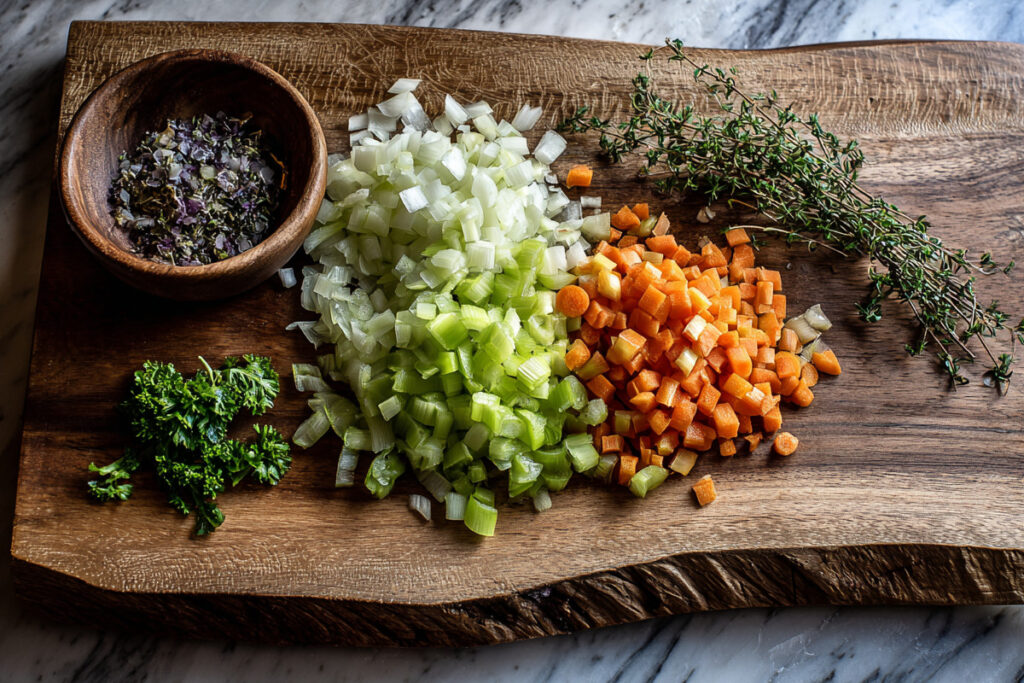
- Soffritto: onion, carrot, and celery, finely diced
- Tomato paste or tomato passata (a small amount)
- White wine (not red)
- Whole milk (this surprises people, but it’s essential)
- Beef or vegetable stock
- Salt and pepper
- Olive oil or butter
What does NOT belong in authentic bolognese:
- Garlic (seriously, none)
- Oregano
- Basil
- Red wine
- Heavy cream (traditionally)
- Bay leaves
- Red pepper flakes
- Lots of tomato sauce
The milk might seem strange if you’re used to American meat sauce, but it serves a purpose. Milk tenderizes the meat and balances the acidity from the tomatoes. It’s been part of the official recipe since 1982.
Why Spaghetti Bolognese Doesn’t Exist in Italy
Former Bologna mayor Virginio Merola once declared on Italian national radio that “spaghetti bolognese doesn’t exist.” He wasn’t being dramatic. In Bologna, you will never find spaghetti bolognese on a menu unless you’re in a tourist trap that’s given up on authenticity.
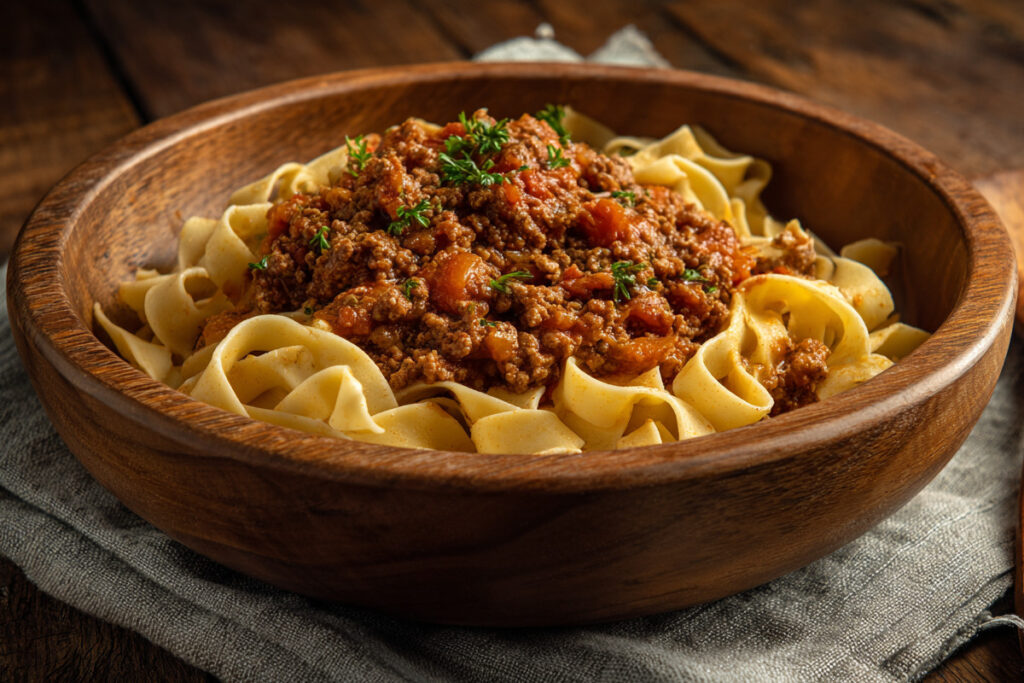
The reason comes down to pasta physics. Bolognese is a chunky, clingy sauce. It needs a pasta shape that can hold onto it. Spaghetti, with its smooth, round surface, lets the sauce slide right off and pool at the bottom of your bowl. Flat, wide pasta like tagliatelle creates grooves and surface area for the sauce to grip.
There’s also a regional identity issue. Bologna sits in Emilia-Romagna, the heartland of fresh egg pasta. Tagliatelle, pappardelle, and other flat noodles are the local tradition. Spaghetti is a dried semolina pasta that belongs to southern Italy. Asking for spaghetti bolognese in Bologna is like ordering a Philly cheesesteak in Texas and asking them to put it on a tortilla. You can do it, but don’t expect locals to take you seriously.
Traditional pasta pairings for bolognese:
- Tagliatelle (the classic choice)
- Pappardelle
- Fettuccine
- Rigatoni or penne (tube shapes that catch sauce)
- Lasagna sheets (with bechamel)
- Gnocchi
Italian-American Meat Sauce: The American Evolution

When Italian immigrants arrived in America in the late 19th and early 20th centuries, they brought their recipes with them. But ingredients were different. Availability was different. Tastes evolved. What emerged was something new: Italian-American cuisine, with its own identity and traditions.
Italian-American meat sauce (often just called “spaghetti sauce” or “meat sauce”) is the Americanized descendant of bolognese. It’s not lesser than authentic bolognese. It’s just different, shaped by over a century of adaptation.
Key Characteristics of Italian-American Meat Sauce
- Tomato-forward: Canned tomatoes are the star, not a supporting player
- Ground beef dominant: Usually just beef, not a beef/pork blend
- Heavy on Italian-American herbs: Oregano, basil, and garlic are staples
- Red wine (if any): When wine is added, it’s usually red
- Quicker cooking time: Can be ready in 30 minutes to 2 hours
- Flexible pasta pairing: Works with any pasta shape, including spaghetti
- No milk: The milk step from bolognese was dropped
This is the sauce most Americans grew up eating. It’s what comes to mind when someone says “spaghetti and meat sauce.” It’s deeply tied to American comfort food culture, and there’s nothing wrong with that.
Why the Differences Matter
If you make Italian-American meat sauce and call it bolognese, you’re going to be disappointed when you visit Italy and order the real thing. True bolognese is more subtle, more orange-brown than red, and doesn’t hit you with the bright tomato acidity you might expect. Knowing the difference helps you set expectations and choose the right sauce for your meal.
What is Ragu? (The Term That Ties It All Together)
“Ragu” is the umbrella term that often causes confusion. When someone says “ragu,” they might mean any number of Italian meat sauces. Bolognese is just one type.
Think of it like this: all bolognese is ragu, but not all ragu is bolognese. It’s the same relationship as “cake” and “chocolate cake.” Chocolate cake is a type of cake, but you wouldn’t call every cake chocolate cake.
Famous Regional Ragu Variations
Ragu alla Bolognese (Bologna): Ground beef and pork, minimal tomato, white wine, milk. The version we’ve been discussing.
Ragu alla Napoletana (Naples): Whole pieces of meat (often pork shoulder, ribs, or braciole), heavy tomato, red wine, no cream or milk. Cooks for hours until the meat falls apart. Served in two courses: pasta with the sauce first, then the meat as a second course. This is the closest ancestor to Italian-American Sunday gravy.
Ragu alla Barese (Bari): Features braciole (thin rolled meat) cooked in tomato sauce. Regional specialty from Puglia.
Ragu alla Siciliana (Sicily): Often includes eggplant and sometimes pine nuts. Reflects the island’s unique culinary influences.
Every region in Italy has its own ragu tradition. The common thread is slow cooking meat in some combination of wine, tomatoes, and aromatics until the flavors meld together. The specific meats, tomato amounts, wine colors, and cooking times vary dramatically.

Sunday Gravy vs Bolognese: A Different Beast Entirely
Walk into an Italian-American household on the East Coast on a Sunday morning, and you’ll likely smell tomatoes simmering on the stove. That’s Sunday gravy (or Sunday sauce, depending on who you ask). It’s a distinctly Italian-American tradition, rooted in Neapolitan ragu but evolved into something uniquely American.
The “Gravy” vs “Sauce” Debate
If you’ve spent any time around Italian-American families, you’ve probably heard arguments about whether to call it “gravy” or “sauce.” The short answer: it depends on your family. Some families have called it gravy for generations. Others call it sauce or “sugo” (the Italian word). There’s no right answer. The dish is the same.
The term “gravy” likely came from Italian immigrants translating “sugo” into English. In Italian, “sugo” can mean sauce or juice, and early immigrants may have associated the meat-enriched liquid with the concept of gravy. Native Italians visiting America are often confused by this terminology, since “gravy” in Italy typically refers to the brown sauce served with roasted meats.
What Makes Sunday Gravy Different from Bolognese
The meat: Sunday gravy uses whole pieces of meat that braise in the sauce for hours. Think meatballs, Italian sausages, pork ribs, braciole (rolled stuffed beef), and sometimes pork shoulder or neck bones. Bolognese uses finely ground meat that becomes part of the sauce itself.
The tomato ratio: Sunday gravy is tomato-heavy, swimming in rich red sauce. Bolognese uses tomatoes sparingly, as a background flavor.
The presentation: Traditional Sunday gravy is served in two courses, just like Neapolitan ragu. First comes the pasta dressed with the sauce (minus the big meat pieces). Then the meat is served separately as a second course. Bolognese is all mixed together.
The cultural context: Sunday gravy is tied to the ritual of family gatherings. It’s not just a sauce; it’s an event. The matriarch starts cooking early in the morning. The sauce simmers all day. Family gathers in the afternoon. Bolognese is delicious, but it doesn’t carry the same ceremonial weight in Italy.
The regional origin: Sunday gravy is Italian-American, developed by immigrants (primarily from southern Italy) in cities like New York, Philadelphia, Boston, and New Jersey. Bolognese is Northern Italian, from Emilia-Romagna.
Marinara vs Bolognese: Not Even Close
Since people often search for this comparison, let’s address it: marinara and bolognese are completely different sauces. The only thing they share is tomatoes.
Marinara sauce is a simple, quick tomato sauce. The name comes from “alla marinara” (sailor’s style), possibly because it was easy for sailors to make or because it was served with seafood. It contains no meat whatsoever.
Marinara Basics
- Ingredients: Tomatoes, garlic, olive oil, basil, oregano, salt
- Cook time: 30 to 60 minutes maximum
- Texture: Smooth to slightly chunky, fairly thin
- Color: Bright red
- Uses: Pizza sauce, pasta, dipping sauce for breadsticks and mozzarella sticks
- Meat: None. Ever.
If someone asks whether to use marinara or bolognese, the real question is whether they want a meatless tomato sauce or a meat sauce. They’re not variations of each other; they’re entirely different categories.
How to Tell Italian Sauces Apart (Visual Guide)
When you’re looking at a bowl of pasta or a menu description, here’s how to identify what you’re actually getting:
| Sauce | Color | Texture | Meat? | Tomato | Traditional Pasta |
|---|---|---|---|---|---|
| Bolognese | Orange-brown | Thick, clingy | Ground | Low | Tagliatelle |
| Meat Sauce | Deep red | Chunky | Ground | High | Spaghetti |
| Sunday Gravy | Deep red | Thick, meaty | Whole pieces | High | Spaghetti, ziti |
| Neapolitan Ragu | Red | Meaty | Whole pieces | High | Ziti, gnocchi |
| Marinara | Bright red | Smooth/chunky | None | 100% | Any pasta, pizza |
Which Sauce Should You Make? (Practical Guide)
Each sauce has its time and place. Here’s when to reach for each one.
Make Authentic Bolognese When…
- You have 3+ hours and want to create something elegant
- You’re making lasagna (pair it with bechamel for the classic combo)
- You want a subtle, sophisticated sauce where meat is the star
- You’re serving fresh tagliatelle, pappardelle, or fettuccine
- You want to impress someone who knows Italian food
- You’re cooking on a weekend with time to spare
Make Italian-American Meat Sauce When…
- It’s a weeknight and you need dinner in an hour or less
- You’re feeding kids who want “spaghetti”
- You want that nostalgic, tomato-forward red sauce flavor
- You’re topping garlic bread or making a meatball sub
- You want something that works with any pasta shape
- You’re making baked ziti or stuffed shells
Make Sunday Gravy When…
- You have all day and family coming over
- You want leftovers for the entire week
- You’re hosting a big Italian-American feast
- You want braised meat AND pasta sauce from one pot
- It’s a holiday or special occasion
- You miss your grandmother’s cooking
Stop Making These Italian Sauce Mistakes
If you want to level up your Italian sauce game, avoid these common errors:
Adding garlic to bolognese: Authentic bolognese contains no garlic. The flavor comes from the soffritto (onion, carrot, celery), the meat, and the slow cooking process. Garlic belongs in Italian-American meat sauce, not bolognese.
Using red wine in bolognese: The official recipe calls for white wine. Red wine is traditional in Neapolitan ragu and Italian-American sauces, but bolognese gets white.
Skipping the milk: It seems weird, but milk is essential to authentic bolognese. It tenderizes the meat and balances acidity. Don’t skip it.
Serving bolognese on spaghetti: Use flat pasta like tagliatelle or pappardelle. The sauce needs something to cling to.
Calling any red meat sauce “bolognese”: If it’s tomato-heavy with oregano and garlic, it’s meat sauce. Bolognese is a specific thing.
Rushing the simmer time: Bolognese needs at least 2 hours, preferably 3-4. Low and slow is non-negotiable. If you’re in a hurry, make meat sauce instead.
Thinking “ragu” and “bolognese” mean the same thing: Ragu is the category. Bolognese is one specific type. They’re not synonyms.
Frequently Asked Questions About Italian Meat Sauces
Is bolognese the same as meat sauce?
No. Authentic bolognese (ragu alla bolognese) uses minimal tomato, a beef/pork blend, white wine, and milk. Italian-American meat sauce is tomato-heavy with herbs like oregano and basil, plus garlic. They share some DNA but are fundamentally different sauces with different flavor profiles.
Why doesn’t spaghetti bolognese exist in Italy?
Bolognese sauce comes from Emilia-Romagna, where fresh egg pasta like tagliatelle is the local tradition. Spaghetti is a southern Italian dried pasta. Italians match regional sauces with regional pastas, and bolognese’s chunky texture needs flat pasta that can grip it. Spaghetti lets the sauce slide right off.
What’s the difference between ragu and bolognese?
Ragu is the umbrella term for any Italian slow-cooked meat sauce. Bolognese is one specific type of ragu, from Bologna. All bolognese is ragu, but not all ragu is bolognese. Other famous ragus include Neapolitan ragu, which uses whole meat pieces and more tomato.
What makes authentic bolognese sauce different?
The 1982 officially registered recipe requires: ground beef and pork, pancetta, soffritto (onion/carrot/celery), white wine, tomato paste or passata, and whole milk. It notably excludes garlic, oregano, basil, and heavy tomato sauce. The result is a meat-forward, orange-brown sauce rather than a red tomato sauce.
Is Sunday gravy the same as bolognese?
No. Sunday gravy is an Italian-American tradition that uses whole meat pieces (meatballs, sausages, ribs, braciole) braised in heavy tomato sauce. It’s served in two courses: pasta with sauce first, then the meat. Bolognese uses ground meat and minimal tomato, all mixed together. They have different origins, ingredients, and presentations.
Can I use red wine in bolognese?
Traditional bolognese uses white wine, not red. Red wine is more common in Neapolitan ragu and Italian-American meat sauce. If you want to stay authentic, stick with dry white wine. If you prefer red wine, you’re making something closer to a generic meat ragu, which is still delicious, just not technically bolognese.
Why do Italians put milk in bolognese?
Milk serves two purposes in authentic bolognese: it tenderizes the meat fibers during the long simmer, and it balances the acidity from the tomatoes. The milk was officially included in the 1982 registered recipe and remains essential to the authentic version. It doesn’t make the sauce taste “milky” since it cooks down over several hours.
What’s the difference between marinara and bolognese?
Marinara is a simple, meatless tomato sauce made with tomatoes, garlic, herbs, and olive oil. It cooks in under an hour. Bolognese is a slow-cooked meat sauce where meat is the primary ingredient. The only thing they share is tomatoes, and even then, bolognese uses much less. They’re entirely different categories of sauce.
The Bottom Line on Italian Meat Sauces
The next time someone uses “bolognese,” “meat sauce,” “ragu,” and “Sunday gravy” interchangeably, you’ll know better. These aren’t just different names for the same thing. They’re distinct sauces with different histories, ingredients, techniques, and purposes.
Authentic bolognese is subtle and meat-forward, with an orange-brown color and minimal tomato. It takes hours to make and pairs with flat egg pasta like tagliatelle. It’s official enough to be registered with the Italian government.
Italian-American meat sauce is tomato-heavy, herb-loaded, and quicker to make. It’s the sauce most Americans grew up with, perfect for weeknight spaghetti dinners.
Sunday gravy is an all-day event featuring whole braised meats in rich tomato sauce. It’s about family, tradition, and eating in multiple courses.
Ragu is the umbrella term covering all Italian slow-cooked meat sauces, with bolognese being just one variety.
None of these is “better” than the others. They serve different purposes and satisfy different cravings. The important thing is knowing what you’re making and what to expect.
If you’ve never made authentic ragu alla bolognese, give it a try. Clear your schedule for a Saturday afternoon, get the right ingredients (don’t forget the milk), and let the sauce simmer for 3-4 hours. It’s a different experience from what you’re used to, and once you taste the real thing, you’ll understand why Italians are so particular about it.
Ready to try authentic ragu alla bolognese? Check out my slow-simmered bolognese recipe for the full technique